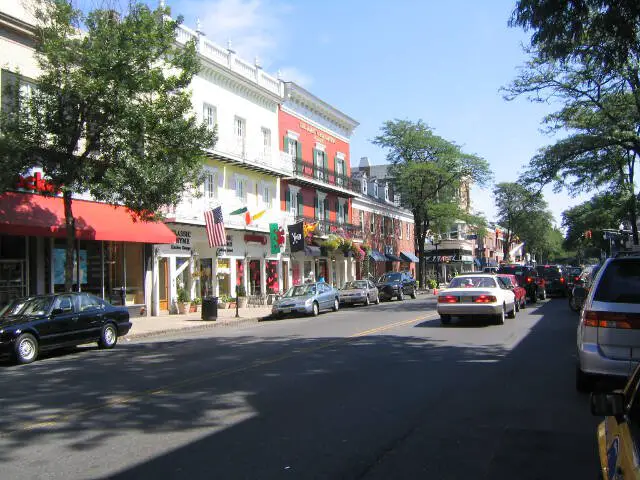
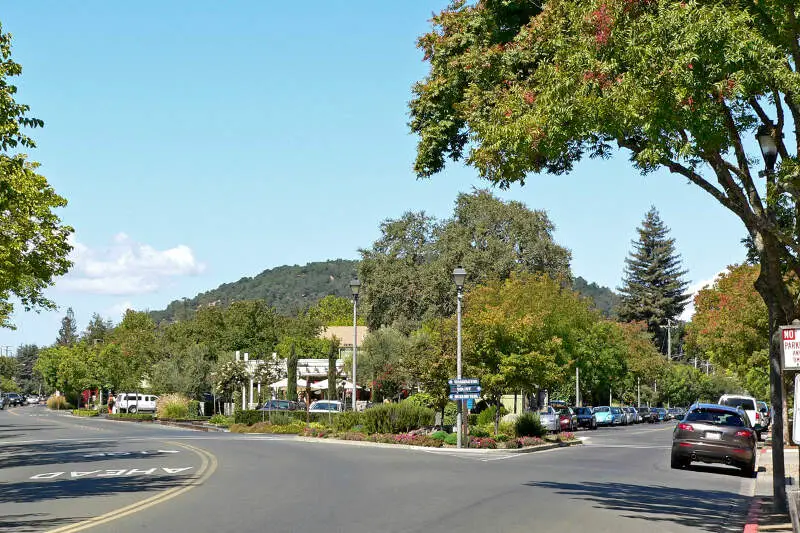
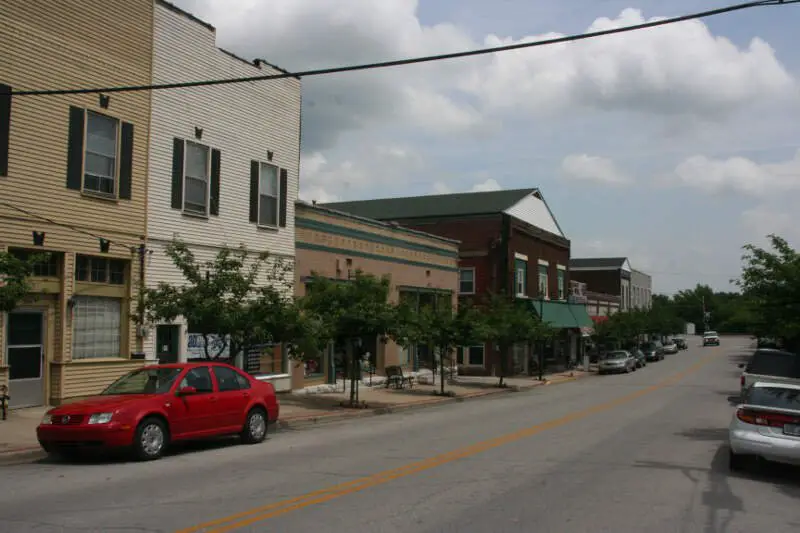
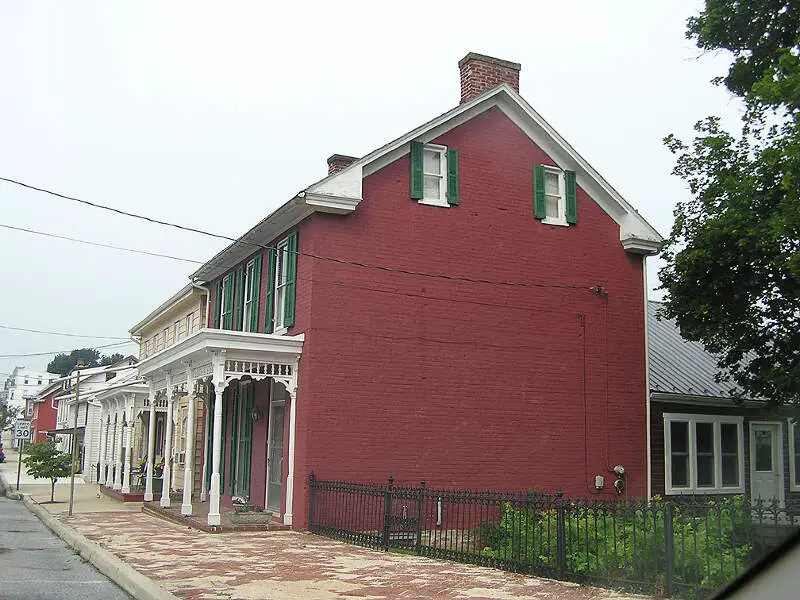
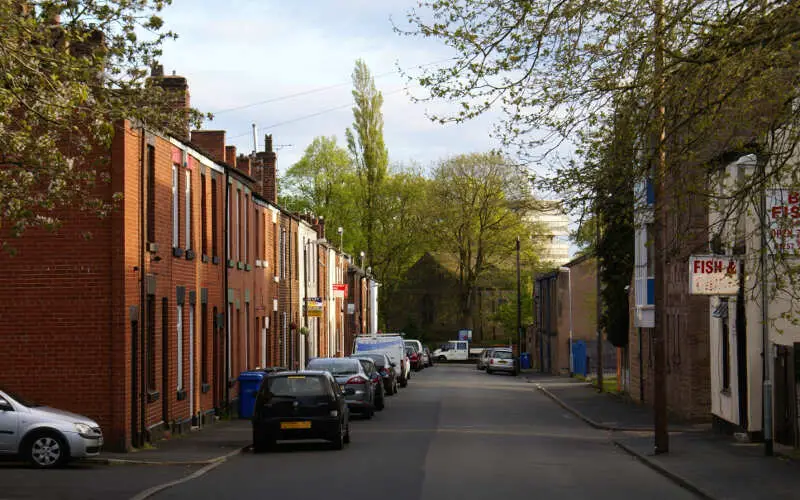
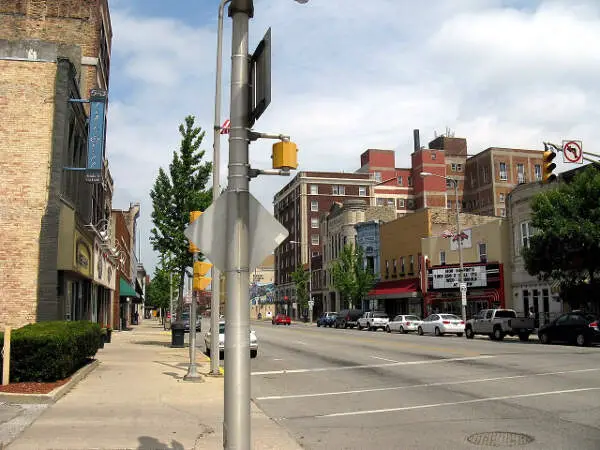
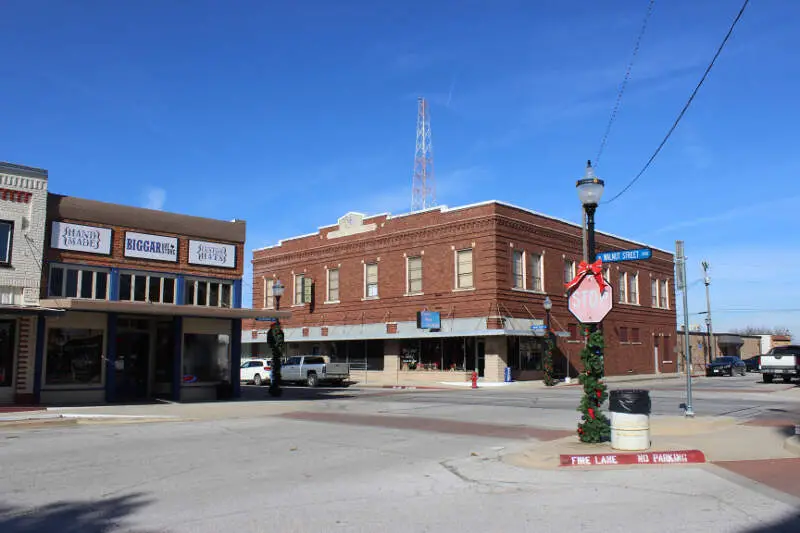
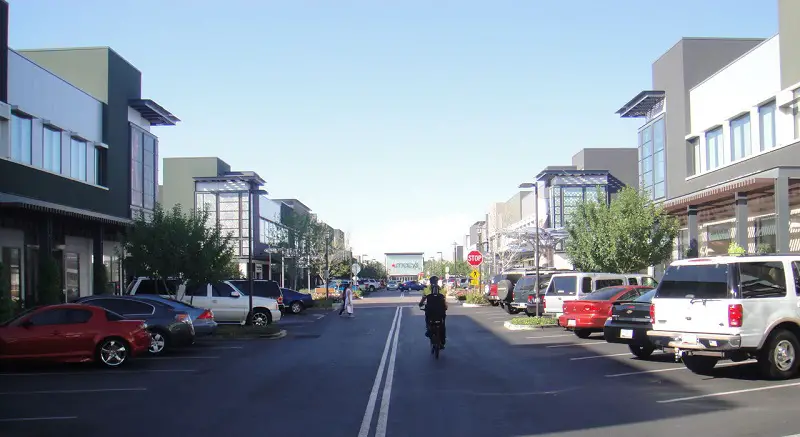
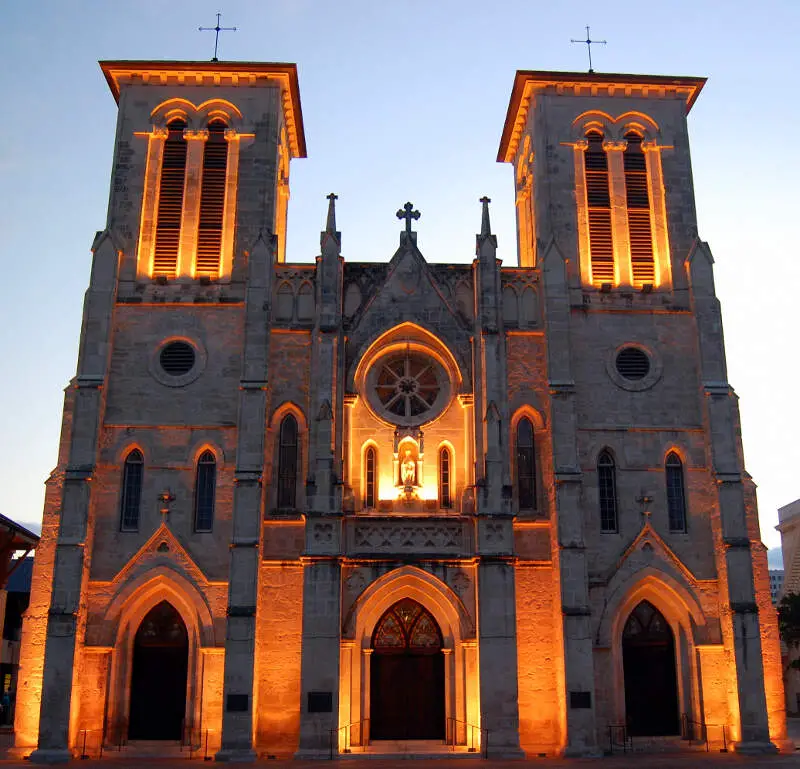
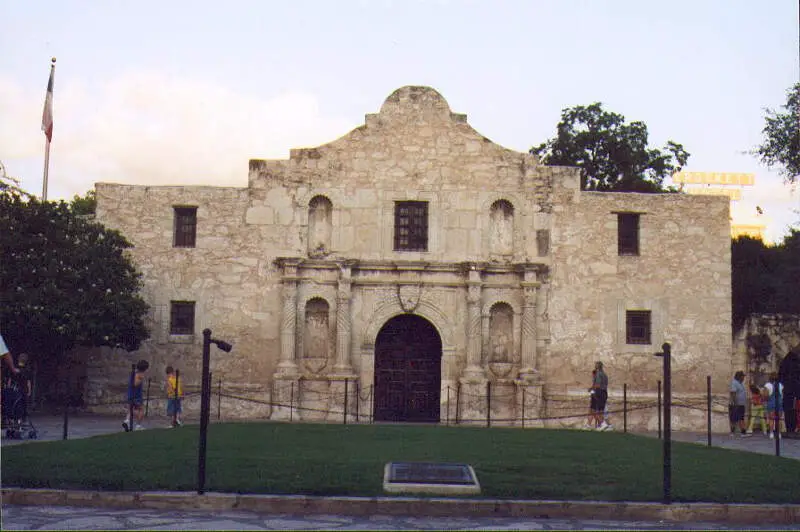
El Paso vs. San Antonio in photos
A side-by-side look at each city.
Cost of living
El Paso is the cheaper city overall — 3% higher in San Antonio than its rival. Index baseline: 100 = national average.
| Living expense | El Paso | San Antonio | US average |
|---|---|---|---|
| Overall | 95 | 98 | 100 |
| Services | 99 | 103 | 100 |
| Groceries | 100 | 101 | 100 |
| Health | 79 | 91 | 100 |
| Housing | 104 | 106 | 100 |
| Transportation | 107 | 103 | 100 |
| Utilities | 98 | 101 | 100 |
Lower index = cheaper. 100 = U.S. national average. Bar inside each cell scales relative to the highest value in the table.
Sources: HomeSnacks Cost of Living indices, normalized so 100 = U.S. national average. Drill in: El Paso cost of living, San Antonio cost of living, or the cheapest cities in America.
Housing breakdown
Home prices are higher in San Antonio. Compare absolute price and price-to-income — a $500k home in a $100k-income city is very different from one in a $50k-income city.
| Metric | El Paso | San Antonio | United States |
|---|---|---|---|
| Median Home Value | $234,774 | $249,809 | $332,700 |
| Median Rent | $1,073 | $1,324 | $1,413 |
| Median Income | $59,745 | $65,056 | $80,734 |
| Home Value To Income | 3.9x | 3.8x | 4.1x |
| Rent To Monthly Income | 0.22x | 0.24x | 0.21x |
Source: U.S. Census Bureau ACS 2020-2024. See also states with the highest rent in America.
Crime
El Paso is the safer city — total crime rate of 1,772 per 100k people vs 5,218 for San Antonio. US average: 2,119.
| Crime (per 100k) | El Paso | San Antonio | US average |
|---|---|---|---|
| Total crime | 1,772 | 5,218 | 2,119 |
| Murder | 3 | 8 | 5 |
| Robbery | 37 | 108 | 61 |
| Aggravated Assault | 238 | 394 | 256 |
| Violent Crime | 278 | 594 | 359 |
| Burglary | 140 | 496 | 229 |
| Larceny | 1,072 | 3,292 | 1,272 |
| Car Theft | 281 | 836 | 259 |
| Property Crime | 1,494 | 4,624 | 1,760 |
Lower = safer. Bar inside each cell scales relative to the highest crime rate in the table.
Source: FBI Uniform Crime Reporting (2024). All rates are per 100,000 people. City pages: El Paso crime, San Antonio crime. See also: safest cities in America.
Diversity
San Antonio is more racially diverse — lower HHI (closer to 0) means a more even mix across groups.
| Group | El Paso | San Antonio | United States |
|---|---|---|---|
| White | 12.0% | 23.0% | 57.4% |
| African American | 3.2% | 6.4% | 11.9% |
| American Indian | 0.2% | 0.1% | 0.5% |
| Asian | 1.3% | 2.9% | 5.9% |
| Hawaiian | 0.2% | 0.1% | 0.2% |
| Other | 0.3% | 0.5% | 0.6% |
| Two Or More | 1.6% | 2.4% | 4.3% |
| Hispanic | 81.2% | 64.6% | 19.3% |
Source: U.S. Census ACS 2020-2024. Lower HHI = more even racial mix. See also: most diverse cities in America.
SnackAbility — overall quality of life
El Paso scores higher overall — 5/10 vs 4/10. SnackAbility is our 1–10 quality-of-life score; the median U.S. city scores a 7.
Scores are 0–10; both bars share the same scale.
SnackAbility is a HomeSnacks proprietary 1–10 score blending jobs, housing, education, commute, amenities, affordability, crime, and diversity. Median U.S. city ≈ 7. Data: Census, BLS, FBI. See also: best places to live in America.
Getting around: El Paso vs. San Antonio
How each city handles commuting, transit, walkability, and car culture — the day-to-day reality that shapes where you'd actually want to live.
If you commute by car (and in both cities, most people do), El Paso is the easier daily drive. The city's grid layout and smaller footprint of 680,000 residents keep rush hour on I-10 and US-54 manageable by Texas-city standards.
Sun Metro buses cover the major corridors, and the Brio rapid transit line links the University of Texas at El Paso campus to the Lower Valley. Cross-border travel into Ciudad Juárez adds a layer of logistics if you work or shop across the international bridges.
San Antonio is a sprawling metro of nearly 1.5 million, and the highway tangle of I-35, I-10, Loop 410, and Loop 1604 shows it. VIA Metropolitan Transit runs a broad bus network, but most destinations still require a car. If you're relocating from a walkable city, neither place will feel familiar, but El Paso's more compact urban core gives it a modest edge for shorter commutes.
Jobs and careers in El Paso vs. San Antonio
The local job market, dominant industries, and which city to choose based on your career.
El Paso's largest employers are anchored in the public sector: Fort Bliss is one of the largest Army installations in the country, alongside the University of Texas at El Paso and University Medical Center of El Paso. Border trade and logistics are also significant, with hundreds of maquiladora-linked companies operating in the region. The city's median household income sits at $59,745, reflecting a job market that skews toward government, healthcare, and light manufacturing.
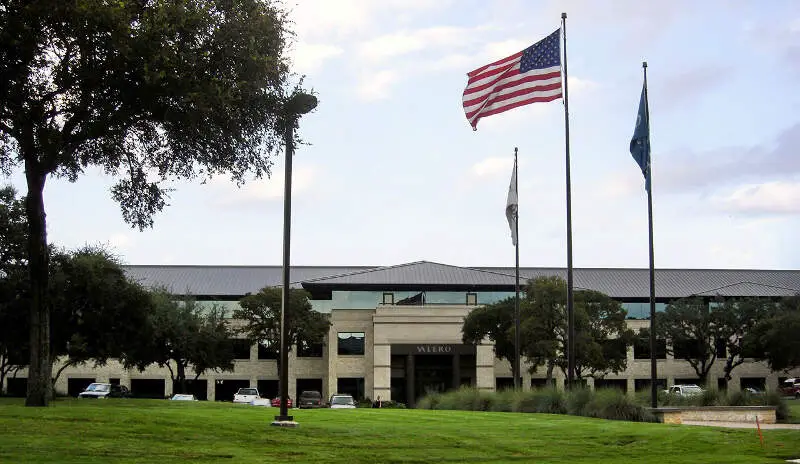
San Antonio has more private-sector depth. USAA, Valero Energy, and H-E-B are all headquartered here, and the South Texas Medical Center employs tens of thousands in healthcare. Toyota's manufacturing plant adds blue-collar opportunity.
Joint Base San Antonio, combining Lackland, Randolph, and Fort Sam Houston, mirrors El Paso's military presence. The median household income of $65,056 reflects that broader employer mix. If you're in tech, finance, or corporate management, San Antonio's larger market gives you more to work with.
Weather and climate
What to expect day-to-day — sun, fog, heat, rain, and the seasonal extremes that shape the lifestyle.
El Paso runs hot, dry, and sunny, with around 297 clear days a year. Summers push past 100°F regularly, but low humidity makes them more bearable than they sound. Winters are mild and short, with only occasional freezes and minimal snow.
The trade-off is a landscape that gets under 9 inches of rain annually and occasional dust storms rolling in from the Chihuahuan Desert. If you have respiratory sensitivities, those high-wind days matter.
San Antonio sits in a humid subtropical zone: summers are hot and sticky, with heat indices well above 100°F from June through September. Winters are generally mild, though ice storms hit a few times a decade and can shut the city down for days.
San Antonio gets roughly 32 inches of rain per year, and flash flooding along creeks and low-water crossings is a real seasonal concern. If you prefer dry heat, El Paso wins this comparison.
Culture, nightlife, and entertainment
Food, music, neighborhoods, and the city vibe that gives each place its personality.
El Paso's cultural identity is binational. The border with Ciudad Juárez is more than a geographic line: it shapes the food, music, art, and daily life in ways you'll notice immediately. The live music scene leans toward norteño, cumbia, and indie rock, with acts that treat El Paso as a stop between Austin and the border.
Downtown's Plaza Theatre hosts concerts and events, and the El Paso Museum of Art has a strong collection of Mexican colonial and borderlands work. The city is smaller, so the nightlife is concentrated and closes earlier.
San Antonio punches above its weight culturally for a Texas city. The River Walk anchors a dense strip of restaurants, bars, and live music venues. The Pearl District has become one of the best urban-redevelopment stories in the Sun Belt, with farmers markets, James Beard-recognized restaurants, and craft cocktail bars.
Fiesta San Antonio draws over a million visitors every spring, and the Spurs give the city a genuine sports identity. If a broader nightlife calendar matters to you, San Antonio is the clear choice.
Outdoor activities and day trips
Parks, beaches, hikes, and the weekend escapes that define life outside the city limits.
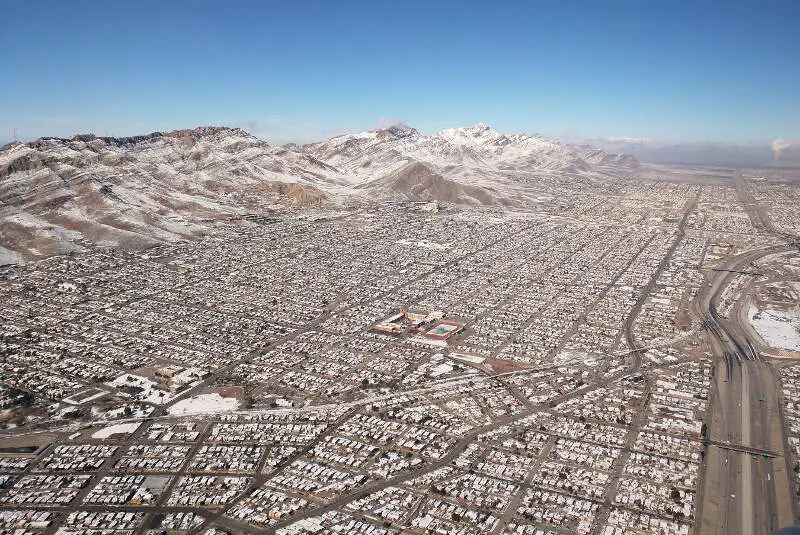
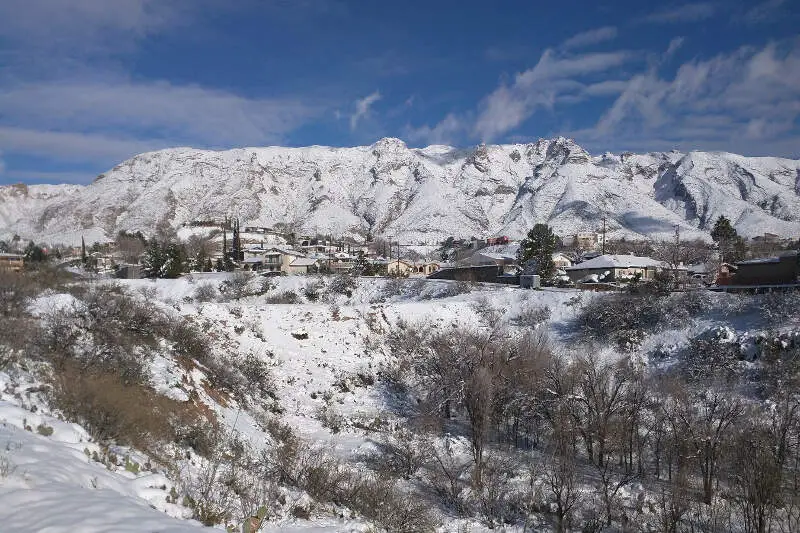
El Paso is underrated for outdoor recreation. Franklin Mountains State Park sits inside city limits and, at over 26,000 acres, is one of the largest urban parks in the country. Hiking, mountain biking, and rock climbing are all there, with genuine desert solitude minutes from downtown.
Day trips reach White Sands National Park in about an hour and Guadalupe Mountains National Park in two. Hueco Tanks State Park is a world-class bouldering destination. The dry climate means trails are almost always accessible.
San Antonio's outdoor scene centers on the Texas Hill Country, which starts just northwest of the city. Guadalupe River State Park, Natural Bridge Caverns, Canyon Lake, and the Frio River corridor are popular weekend destinations. Government Canyon State Natural Area has solid hiking close to town.
The San Antonio River Walk has expanded into a greenbelt with miles of paved trails. Neither city has mountains, but El Paso's proximity to true public-lands wilderness gives it an edge if backcountry access drives your outdoor life.
Bottom line: which city is right for you?
Based on the head-to-head data above, here's the short version — pick the city that lines up with what you actually care about.
Choose El Paso if you prioritize…
- a lower cost of living (cheaper groceries, services, and day-to-day expenses).
- lower crime — a safer place to live, work, and raise a family.
- a higher overall SnackAbility quality-of-life score.
Choose San Antonio if you prioritize…
- more affordable housing relative to El Paso.
- a more racially diverse community (lower HHI on Census data).
Methodology: winners are picked from public data — U.S. Census Bureau ACS (income, home value, rent, race/HHI), FBI Uniform Crime Reporting (crime rates per 100k), and HomeSnacks' proprietary SnackAbility quality-of-life score, which blends Bureau of Labor Statistics data with the above.
Other comparisons
Still weighing your options? See how these two cities stack up against other places we've compared head-to-head.