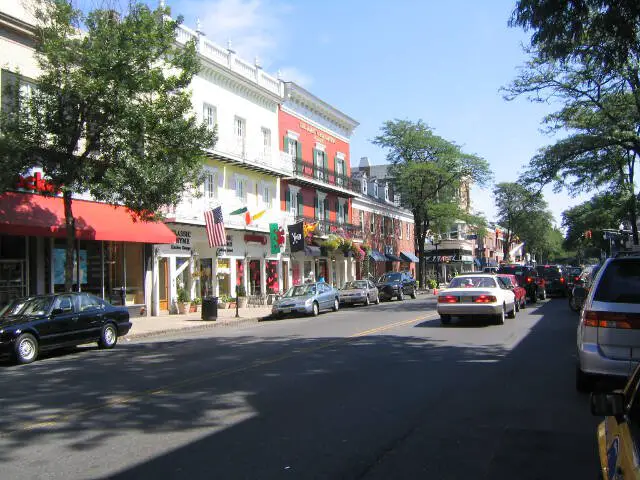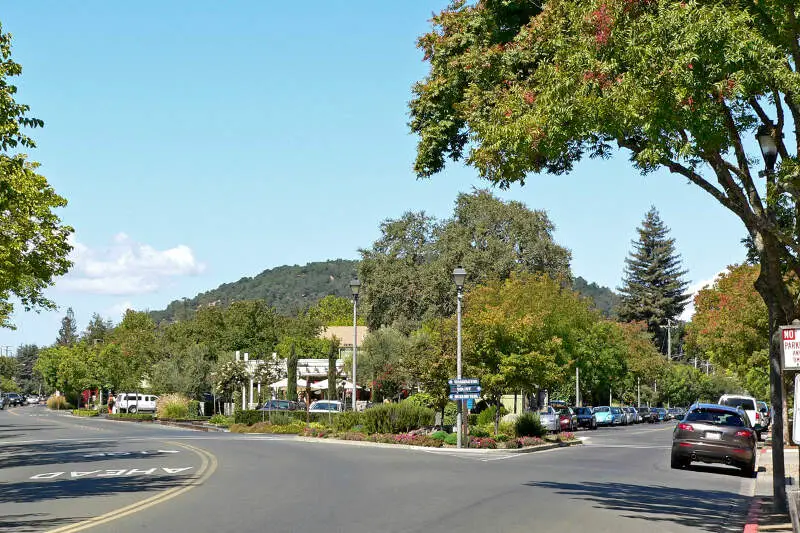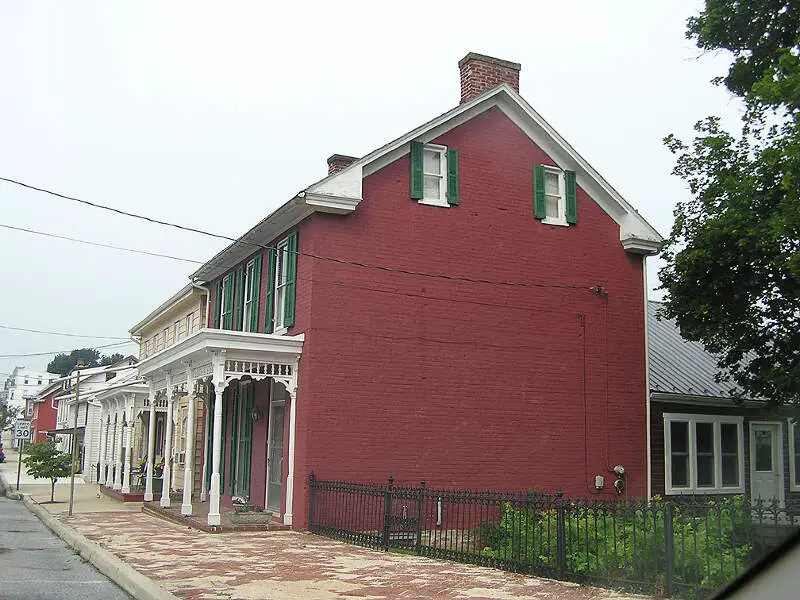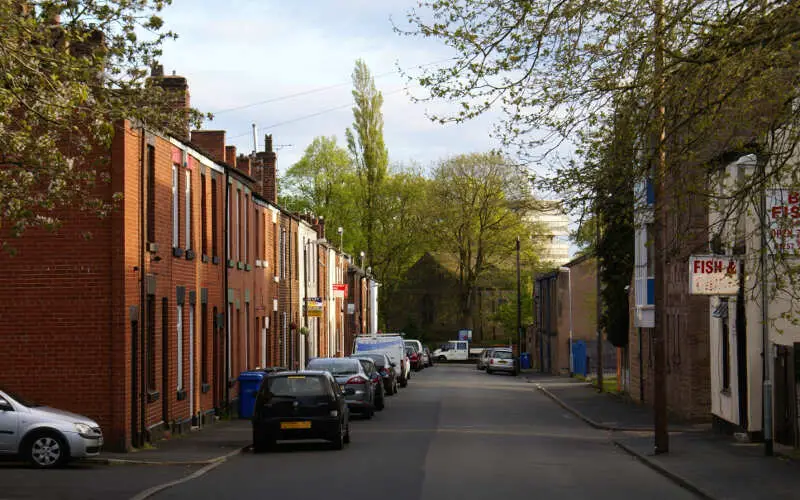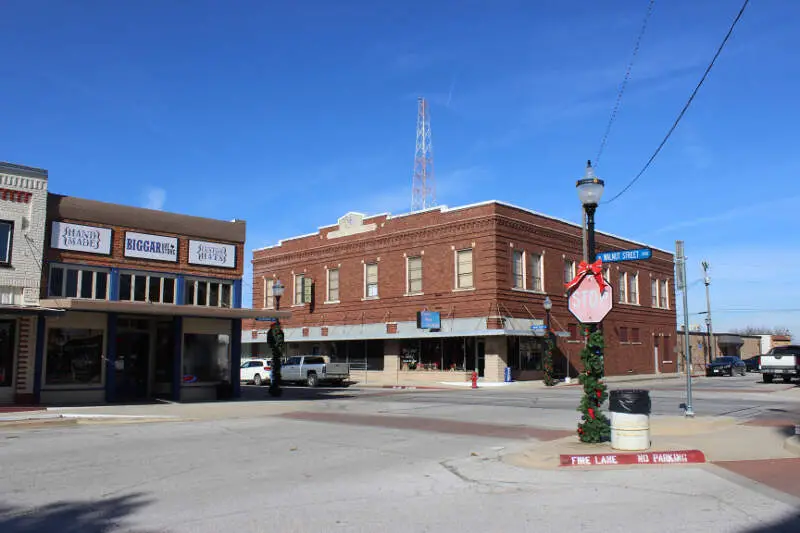
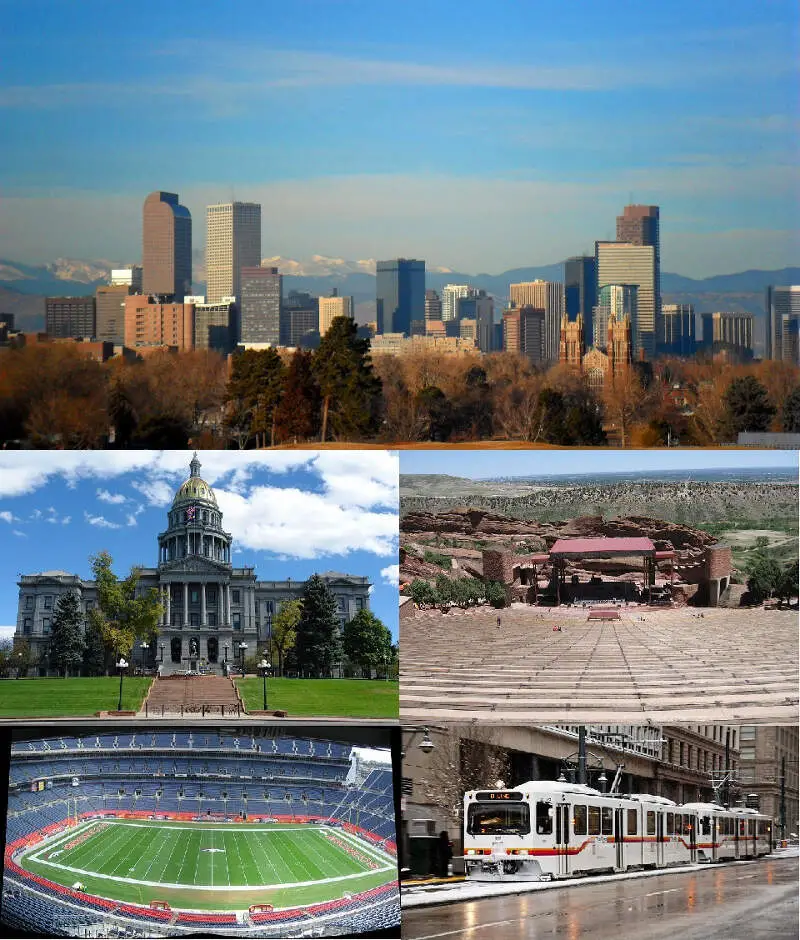
Sacramento vs. Denver in photos
A side-by-side look at each city.




Cost of living
Sacramento is the cheaper city overall — 4% higher in Denver than its rival. Index baseline: 100 = national average.
| Living expense | Sacramento | Denver | US average |
|---|---|---|---|
| Overall | 137 | 142 | 100 |
| Services | 109 | 108 | 100 |
| Groceries | 122 | 107 | 100 |
| Health | 184 | 214 | 100 |
| Housing | 124 | 113 | 100 |
| Transportation | 121 | 110 | 100 |
| Utilities | 122 | 111 | 100 |
Lower index = cheaper. 100 = U.S. national average. Bar inside each cell scales relative to the highest value in the table.
Sources: HomeSnacks Cost of Living indices, normalized so 100 = U.S. national average. Drill in: Sacramento cost of living, Denver cost of living, or the cheapest cities in America.
Housing breakdown
Home prices are higher in Denver. Compare absolute price and price-to-income — a $500k home in a $100k-income city is very different from one in a $50k-income city.
| Metric | Sacramento | Denver | United States |
|---|---|---|---|
| Median Home Value | $479,765 | $539,666 | $332,700 |
| Median Rent | $1,779 | $1,831 | $1,413 |
| Median Income | $87,321 | $94,718 | $80,734 |
| Home Value To Income | 5.5x | 5.7x | 4.1x |
| Rent To Monthly Income | 0.24x | 0.23x | 0.21x |
Source: U.S. Census Bureau ACS 2020-2024. See also states with the highest rent in America.
Crime
Sacramento is the safer city — total crime rate of 3,302 per 100k people vs 5,755 for Denver. US average: 2,119.
| Crime (per 100k) | Sacramento | Denver | US average |
|---|---|---|---|
| Total crime | 3,302 | 5,755 | 2,119 |
| Murder | 9 | 10 | 5 |
| Robbery | 192 | 176 | 61 |
| Aggravated Assault | 520 | 713 | 256 |
| Violent Crime | 755 | 993 | 359 |
| Burglary | 442 | 708 | 229 |
| Larceny | 1,596 | 2,822 | 1,272 |
| Car Theft | 510 | 1,232 | 259 |
| Property Crime | 2,547 | 4,762 | 1,760 |
Lower = safer. Bar inside each cell scales relative to the highest crime rate in the table.
Source: FBI Uniform Crime Reporting (2024). All rates are per 100,000 people. City pages: Sacramento crime, Denver crime. See also: safest cities in America.
Diversity
Sacramento is more racially diverse — lower HHI (closer to 0) means a more even mix across groups.
| Group | Sacramento | Denver | United States |
|---|---|---|---|
| White | 29.3% | 54.0% | 57.4% |
| African American | 11.8% | 8.6% | 11.9% |
| American Indian | 0.2% | 0.3% | 0.5% |
| Asian | 20.1% | 3.6% | 5.9% |
| Hawaiian | 1.5% | 0.1% | 0.2% |
| Other | 0.8% | 0.5% | 0.6% |
| Two Or More | 6.9% | 4.8% | 4.3% |
| Hispanic | 29.4% | 28.0% | 19.3% |
Source: U.S. Census ACS 2020-2024. Lower HHI = more even racial mix. See also: most diverse cities in America.
SnackAbility — overall quality of life
Denver scores higher overall — 8/10 vs 7/10. SnackAbility is our 1–10 quality-of-life score; the median U.S. city scores a 7.
Scores are 0–10; both bars share the same scale.
SnackAbility is a HomeSnacks proprietary 1–10 score blending jobs, housing, education, commute, amenities, affordability, crime, and diversity. Median U.S. city ≈ 7. Data: Census, BLS, FBI. See also: best places to live in America.
Getting around: Sacramento vs. Denver
How each city handles commuting, transit, walkability, and car culture — the day-to-day reality that shapes where you'd actually want to live.
Sacramento's RT light rail runs two lines, Gold and Blue, connecting downtown to suburbs like Folsom and Elk Grove, alongside an extensive bus system. The city is famously flat, making it one of the most bikeable large cities in the country. Many residents commute along the American River Bike Trail or dedicated city lanes.
If you drive, I-5 and US-50 handle most of the load, and gridlock rarely reaches the extremes you see in LA or the Bay Area.
Denver's RTD is considerably larger, with light rail, commuter rail, and the A Line running from downtown Union Station to Denver International Airport in about 37 minutes. Denver is still largely car-dependent, though, and I-25 and I-70 see brutal peak-hour slowdowns.
Both cities sit above the US average for car commuting. Denver offers more rail options overall, but if you work remotely or close to a station, either city rewards you.
Jobs and careers in Sacramento vs. Denver
The local job market, dominant industries, and which city to choose based on your career.
Sacramento's biggest employer is the State of California, and if you work in policy, public administration, healthcare regulation, or law, the state capital gives you a real career edge. Median household income sits at $87,321.
UC Davis Health, Sutter Health, and Dignity Health anchor a large medical sector, and Intel's campus in nearby Folsom adds tech weight. State government still dominates, but the economy is slowly broadening.
Denver lands higher, at $94,718 median household income, backed by a wider private-sector mix. Energy companies (including renewables), aerospace contractors like Lockheed Martin and Raytheon, and a growing tech scene with large Google, Amazon, and Palantir presences all pull in talent. Healthcare is substantial too, with UCHealth and SCL Health among the big employers.
If your field is private-sector tech, energy, or aerospace, Denver offers more salary upside than Sacramento's government-heavy market.
Weather and climate
What to expect day-to-day — sun, fog, heat, rain, and the seasonal extremes that shape the lifestyle.
Sacramento runs on a classic Mediterranean rhythm: long, rainless summers where triple-digit days in July and August are routine, followed by mild, wet winters that rarely see frost. Annual rainfall averages only about 18 inches, nearly all of it falling between November and March. You get roughly 265 sunny days per year, though summer heat is relentless and air conditioning is not optional.
Denver is a different story at 5,280 feet. Summers are warm but not brutal; afternoon thunderstorms keep temperatures in check, and the city averages 300 sunshine days annually, more than Miami. Winters bring real snow, though Denver's low humidity and frequent Chinook winds mean it often melts within a day or two.
If you want four distinct seasons without brutal cold, Denver fits. If you prefer a virtually frost-free winter and don't mind dry summer heat, Sacramento is your match.
Culture, nightlife, and entertainment
Food, music, neighborhoods, and the city vibe that gives each place its personality.
Sacramento has built a real identity around food. It markets itself as America's Farm-to-Fork Capital with genuine justification, given its position in the Central Valley. Midtown is the social hub: a walkable grid of restaurants, wine bars, coffee shops, and music venues centered on the R Street Corridor and Grid district.
Golden 1 Center draws NBA action (Kings) and major concerts, while Old Sacramento offers a heritage district along the riverfront. The scene is more low-key than San Francisco but genuinely livable.
Denver has more going on than its size might suggest. LoDo around Coors Field is dense with bars, restaurants, and live music, and the RiNo Arts District has become one of the more interesting creative neighborhoods in the Mountain West. Denver also has a well-documented craft beer culture, with more breweries per capita than most US cities.
Ball Arena hosts the Nuggets, Avalanche, and top touring acts. Denver's nightlife and cultural calendar are more varied and higher-energy than Sacramento's, which tracks with its larger population and higher income base.
Outdoor activities and day trips
Parks, beaches, hikes, and the weekend escapes that define life outside the city limits.
Sacramento's outdoor anchor is the American River Parkway, a 32-mile greenbelt stretching from the confluence of the American and Sacramento Rivers east to Folsom Lake. It's one of the best urban trail systems in California for biking, running, and kayaking. The Delta adds fishing and boating options close to the city.
Lake Tahoe is roughly two hours away, giving you world-class skiing and summer hiking within a half-day drive. Napa and the Sierra Nevada foothills are similarly close. What Sacramento lacks in immediate mountain terrain it makes up for with proximity.
Denver has the mountains in its backyard in a way few major American cities can claim. Rocky Mountain National Park is about 90 minutes north, and ski resorts like Breckenridge, Keystone, Vail, and Arapahoe Basin are all within 1.5 to 2 hours on I-70. In the city itself, Cherry Creek State Park, Chatfield Reservoir, and Red Rocks Park offer serious hiking and cycling without leaving metro Denver.
If outdoor recreation is a primary factor in your move, Denver's immediate access to high-altitude terrain is hard to beat.
Bottom line: which city is right for you?
Based on the head-to-head data above, here's the short version — pick the city that lines up with what you actually care about.
Choose Sacramento if you prioritize…
- a lower cost of living (cheaper groceries, services, and day-to-day expenses).
- lower crime — a safer place to live, work, and raise a family.
- a more racially diverse community (lower HHI on Census data).
Choose Denver if you prioritize…
- more affordable housing relative to Sacramento.
- a higher overall SnackAbility quality-of-life score.
Methodology: winners are picked from public data — U.S. Census Bureau ACS (income, home value, rent, race/HHI), FBI Uniform Crime Reporting (crime rates per 100k), and HomeSnacks' proprietary SnackAbility quality-of-life score, which blends Bureau of Labor Statistics data with the above.
Other comparisons
Still weighing your options? See how these two cities stack up against other places we've compared head-to-head.