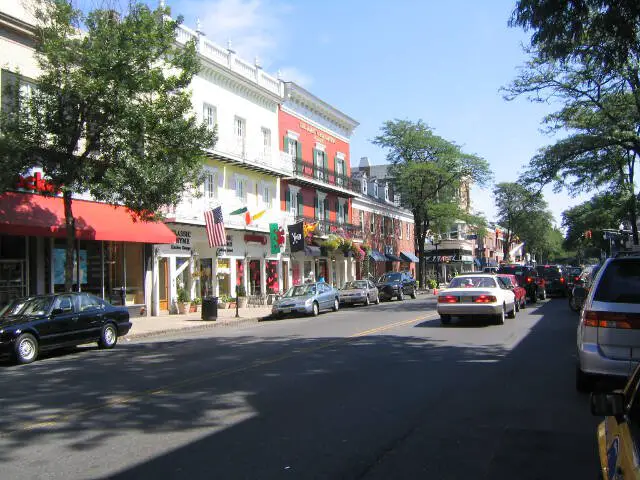
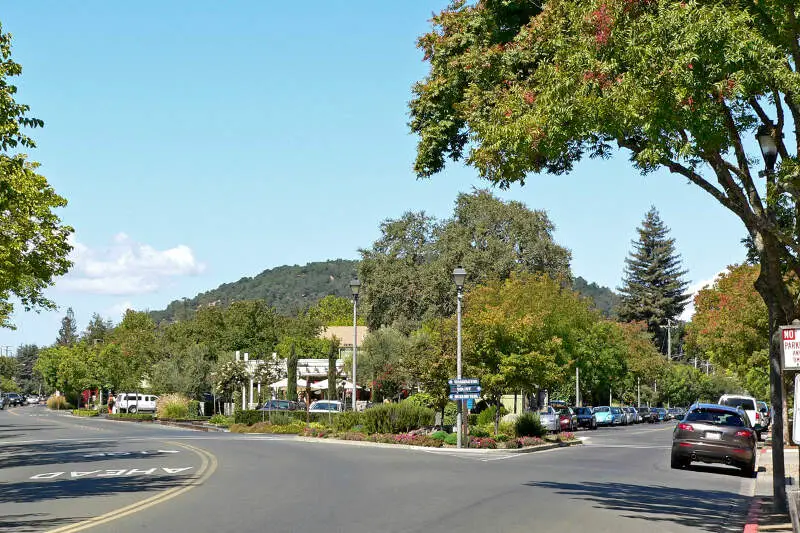
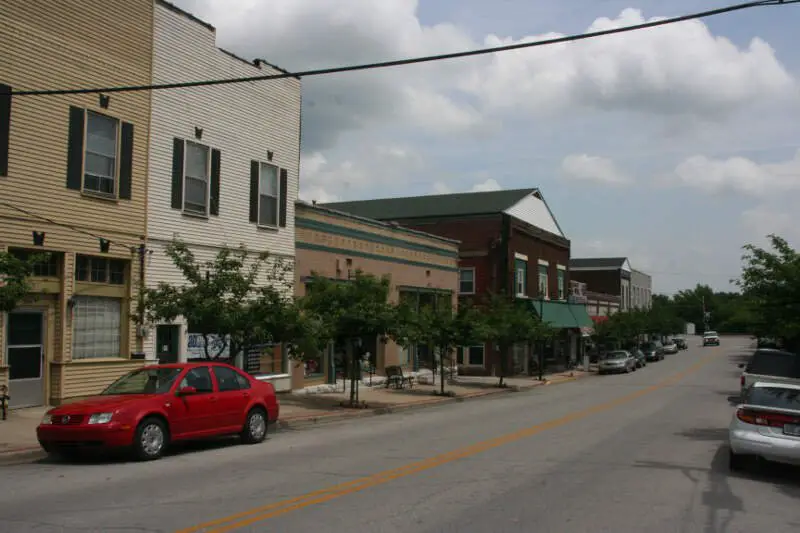
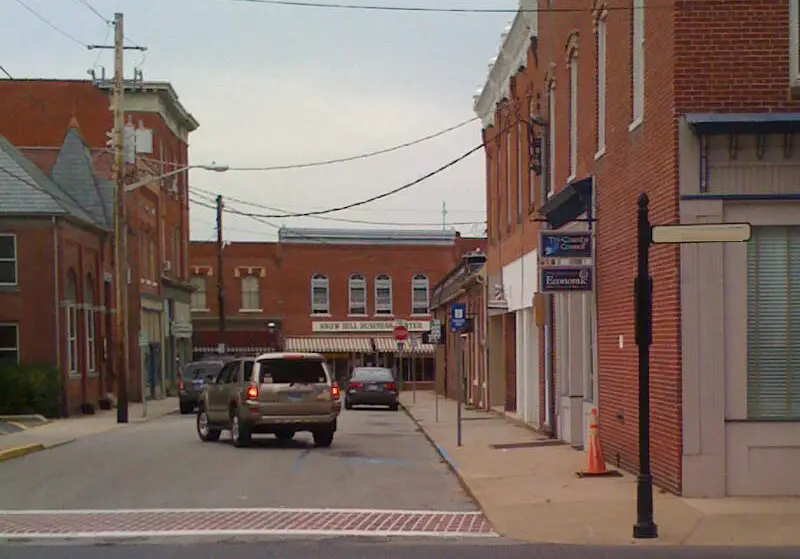
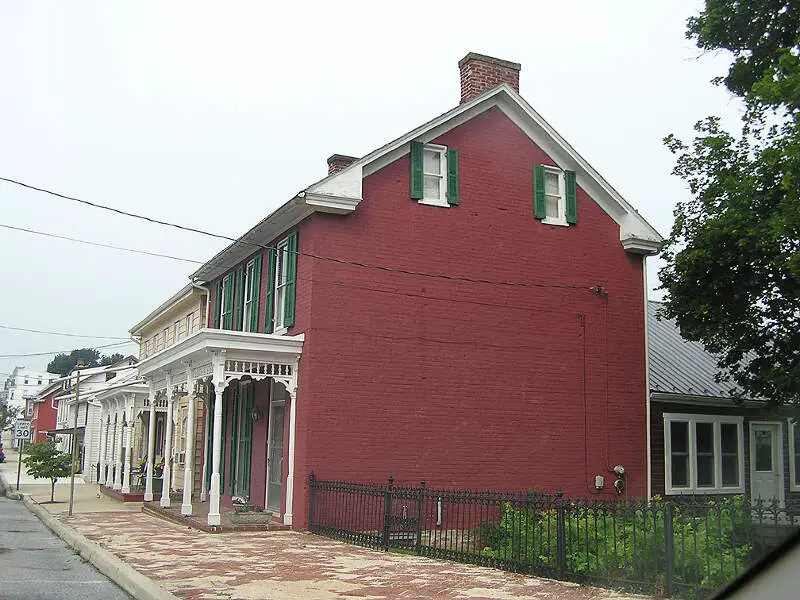
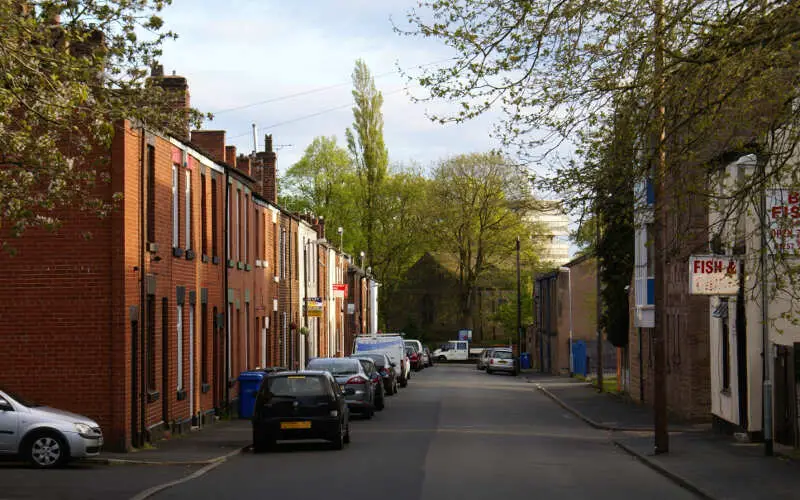
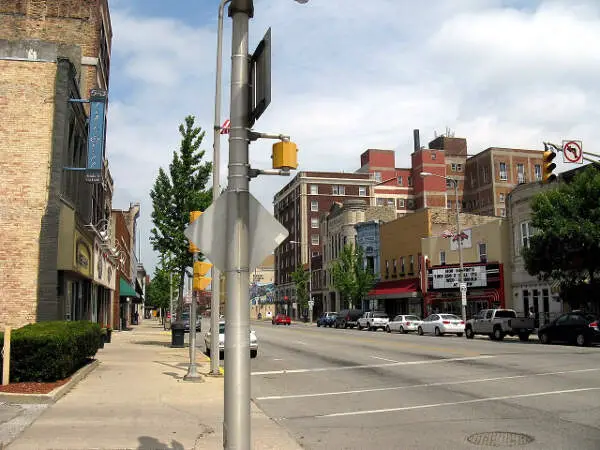
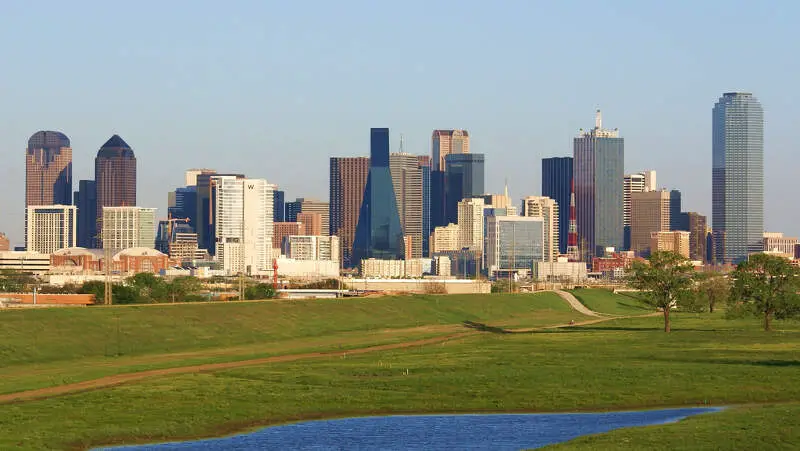
Arlington vs. Seattle in photos
A side-by-side look at each city.




Cost of living
Arlington is the cheaper city overall — 45% higher in Seattle than its rival. Index baseline: 100 = national average.
| Living expense | Arlington | Seattle | US average |
|---|---|---|---|
| Overall | 99 | 181 | 100 |
| Services | 99 | 107 | 100 |
| Groceries | 99 | 111 | 100 |
| Health | 106 | 326 | 100 |
| Housing | 96 | 125 | 100 |
| Transportation | 102 | 112 | 100 |
| Utilities | 98 | 123 | 100 |
Lower index = cheaper. 100 = U.S. national average. Bar inside each cell scales relative to the highest value in the table.
Sources: HomeSnacks Cost of Living indices, normalized so 100 = U.S. national average. Drill in: Arlington cost of living, Seattle cost of living, or the cheapest cities in America.
Housing breakdown
Home prices are higher in Seattle. Compare absolute price and price-to-income — a $500k home in a $100k-income city is very different from one in a $50k-income city.
| Metric | Arlington | Seattle | United States |
|---|---|---|---|
| Median Home Value | $310,971 | $868,680 | $332,700 |
| Median Rent | $1,470 | $2,030 | $1,413 |
| Median Income | $75,171 | $123,860 | $80,734 |
| Home Value To Income | 4.1x | 7.0x | 4.1x |
| Rent To Monthly Income | 0.23x | 0.2x | 0.21x |
Source: U.S. Census Bureau ACS 2020-2024. See also states with the highest rent in America.
Crime
Arlington is the safer city — total crime rate of 2,896 per 100k people vs 5,783 for Seattle. US average: 2,119.
| Crime (per 100k) | Arlington | Seattle | US average |
|---|---|---|---|
| Total crime | 2,896 | 5,783 | 2,119 |
| Murder | 4 | 7 | 5 |
| Robbery | 60 | 221 | 61 |
| Aggravated Assault | 347 | 501 | 256 |
| Violent Crime | 483 | 775 | 359 |
| Burglary | 264 | 1,152 | 229 |
| Larceny | 1,738 | 2,882 | 1,272 |
| Car Theft | 411 | 974 | 259 |
| Property Crime | 2,413 | 5,008 | 1,760 |
Lower = safer. Bar inside each cell scales relative to the highest crime rate in the table.
Source: FBI Uniform Crime Reporting (2024). All rates are per 100,000 people. City pages: Arlington crime, Seattle crime. See also: safest cities in America.
Diversity
Arlington is more racially diverse — lower HHI (closer to 0) means a more even mix across groups.
| Group | Arlington | Seattle | United States |
|---|---|---|---|
| White | 34.1% | 58.8% | 57.4% |
| African American | 22.1% | 6.4% | 11.9% |
| American Indian | 0.1% | 0.3% | 0.5% |
| Asian | 7.3% | 17.5% | 5.9% |
| Hawaiian | 0.3% | 0.2% | 0.2% |
| Other | 0.4% | 0.6% | 0.6% |
| Two Or More | 3.5% | 7.7% | 4.3% |
| Hispanic | 32.2% | 8.5% | 19.3% |
Source: U.S. Census ACS 2020-2024. Lower HHI = more even racial mix. See also: most diverse cities in America.
SnackAbility — overall quality of life
Seattle scores higher overall — 8.5/10 vs 6/10. SnackAbility is our 1–10 quality-of-life score; the median U.S. city scores a 7.
Scores are 0–10; both bars share the same scale.
SnackAbility is a HomeSnacks proprietary 1–10 score blending jobs, housing, education, commute, amenities, affordability, crime, and diversity. Median U.S. city ≈ 7. Data: Census, BLS, FBI. See also: best places to live in America.
Getting around: Arlington vs. Seattle
How each city handles commuting, transit, walkability, and car culture — the day-to-day reality that shapes where you'd actually want to live.
Arlington is almost entirely car-dependent — one of the largest U.S. cities without a real public transit network, so budget for a vehicle if you move there. Most residents get around via I-20, Highway 360, and the I-30 corridor connecting to Dallas and Fort Worth. Parking is cheap and abundant, and you're rarely more than a short drive from what you need.
Seattle has King County Metro buses and Sound Transit's Link light rail, which runs from Sea-Tac Airport through downtown, Capitol Hill, and up to the University District. The geography (hills, bridges, waterways) makes commutes punishing, and I-5 and SR-99 back up badly during peak hours. If you work in South Lake Union or downtown and live along a rail corridor, you can go car-free; if you don't, the gridlock will remind you daily.
Jobs and careers in Arlington vs. Seattle
The local job market, dominant industries, and which city to choose based on your career.
Arlington's economy runs on entertainment, logistics, and education. AT&T Stadium and Globe Life Field drive hospitality and event hiring, the University of Texas at Arlington anchors research and healthcare jobs, and the broader DFW metro adds finance, insurance, and tech in nearby Irving and Plano. Median household income is $75,171, and a cost of living index of 99 means your dollar goes about as far as the national average.
Seattle is one of the densest tech job markets in the world. Amazon's headquarters is in South Lake Union, Microsoft's campus is just east in Redmond, and Boeing anchors aerospace across the region. Median household income hits $123,860, well above Arlington's, but a cost of living index of 181 eats into that gap fast; if you're a software engineer or work in cloud infrastructure, Seattle's salary ceiling is hard to match, but otherwise Arlington's affordability may outweigh the income difference.
Weather and climate
What to expect day-to-day — sun, fog, heat, rain, and the seasonal extremes that shape the lifestyle.
Arlington has classic North Texas weather: summers regularly top 100°F from June through September, and the humidity makes it feel worse. Winters are mild most of the time, but occasional ice storms shut the city down — Dallas-Fort Worth infrastructure isn't built for frozen roads. Spring brings severe thunderstorms and real tornado risk; Arlington sits squarely in Tornado Alley.
Seattle trades heat for gray: expect overcast skies and steady drizzle from October through April, with about 38 inches of annual rainfall that arrives mostly as mist. Summers are a different story, with highs in the low-to-mid 70s, low humidity, and almost no rain from July through September. If you want to avoid triple-digit heat and tornado watches, Seattle's temperate marine climate wins; if unrelenting sun is non-negotiable, Arlington does.
Culture, nightlife, and entertainment
Food, music, neighborhoods, and the city vibe that gives each place its personality.
Arlington's culture centers on big-venue entertainment. AT&T Stadium and Globe Life Field anchor an Entertainment District lined with bars and restaurants, and Six Flags Over Texas has been drawing visitors since 1961. The scene skews suburban — chain restaurants, sports bars, and some younger energy from the University of Texas at Arlington, but no dense walkable neighborhood with a distinct character of its own.
Seattle's cultural footprint is bigger than its size suggests. Capitol Hill has live music venues, independent bars, and a long LGBTQ+ history; Pike Place Market is a working public market that locals depend on daily. The city's music legacy (Jimi Hendrix, Nirvana, Pearl Jam) still feels lived-in, and the Seattle Art Museum and Chihuly Garden and Glass add serious fine arts alongside nightlife that runs later and denser than anything in Arlington.
Outdoor activities and day trips
Parks, beaches, hikes, and the weekend escapes that define life outside the city limits.
Arlington's outdoor options are solid for a suburban Texas city. River Legacy Parks covers 1,300 acres along the Trinity River with trails, mountain biking, and kayak launches, and Lake Arlington adds local fishing and boating. Day trips to the Fort Worth Nature Center or Dinosaur Valley State Park in Glen Rose are doable on a weekend, though the flat terrain and brutal summers push most outdoor activity to early mornings between June and September.
Seattle's big draw is proximity to genuine wilderness. Mount Rainier National Park is about 90 minutes southeast, Olympic National Park is a ferry and short drive west, and the North Cascades are an easy day trip for hiking, skiing, or climbing. Within the city, Discovery Park covers 500 acres of bluff and beach along Puget Sound, and you can kayak from Eastlake or bike the Burke-Gilman Trail.
Bottom line: which city is right for you?
Based on the head-to-head data above, here's the short version — pick the city that lines up with what you actually care about.
Choose Arlington if you prioritize…
- a lower cost of living (cheaper groceries, services, and day-to-day expenses).
- lower crime — a safer place to live, work, and raise a family.
- a more racially diverse community (lower HHI on Census data).
Choose Seattle if you prioritize…
- more affordable housing relative to Arlington.
- a higher overall SnackAbility quality-of-life score.
Methodology: winners are picked from public data — U.S. Census Bureau ACS (income, home value, rent, race/HHI), FBI Uniform Crime Reporting (crime rates per 100k), and HomeSnacks' proprietary SnackAbility quality-of-life score, which blends Bureau of Labor Statistics data with the above.
Other comparisons
Still weighing your options? See how these two cities stack up against other places we've compared head-to-head.