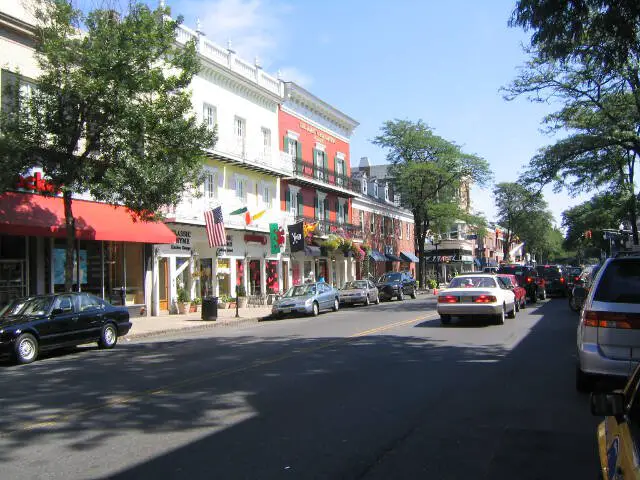
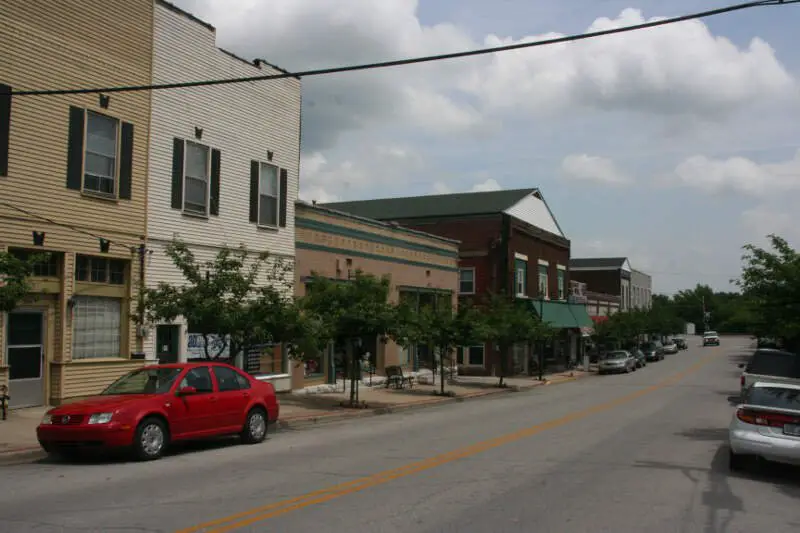
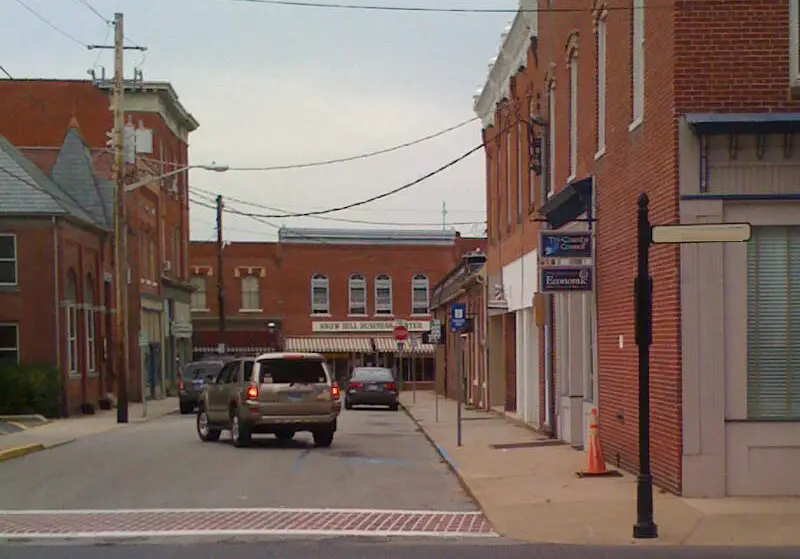
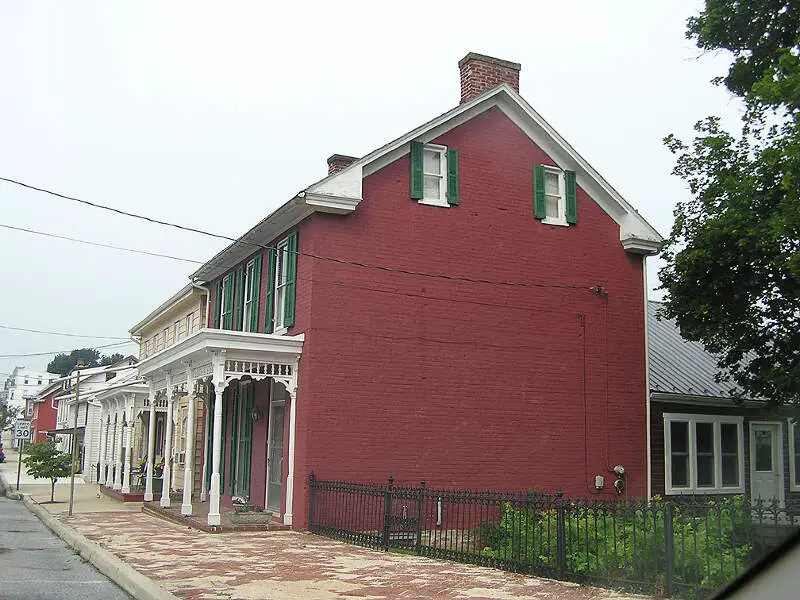
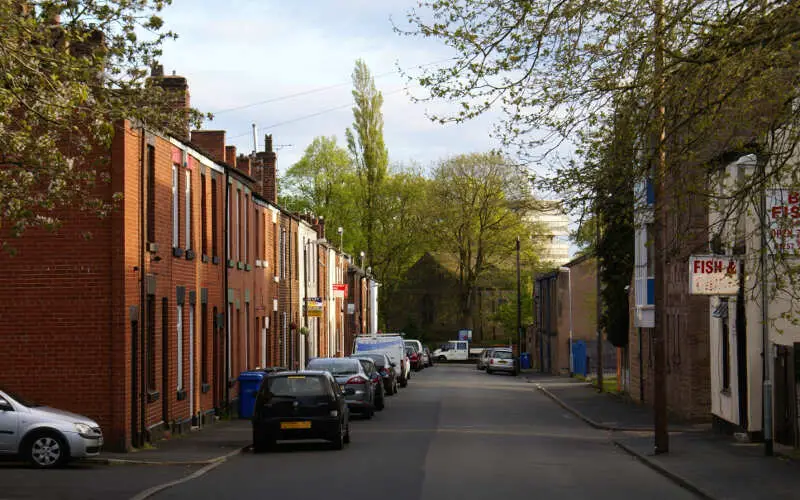
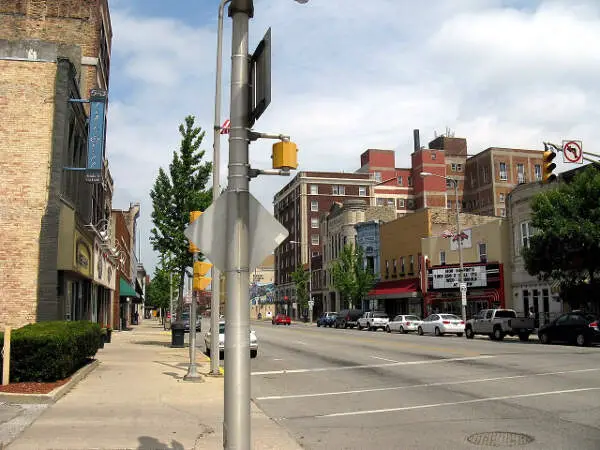
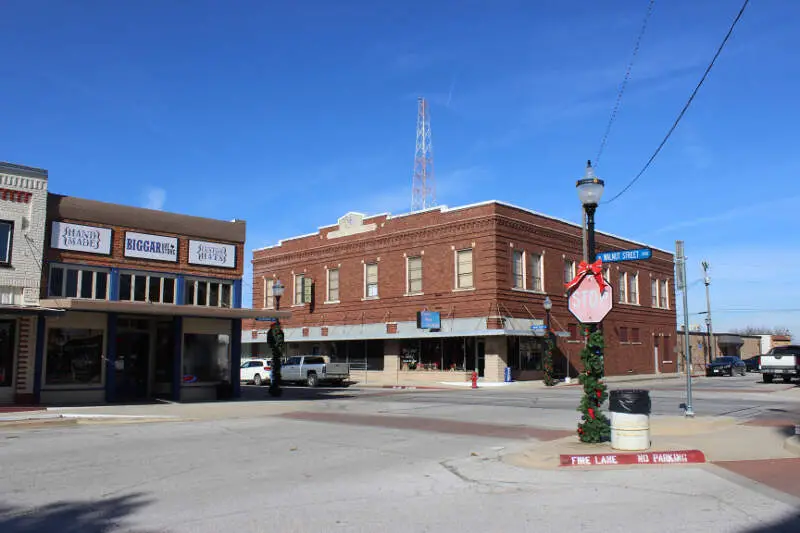
Baltimore vs. Atlanta in photos
A side-by-side look at each city.



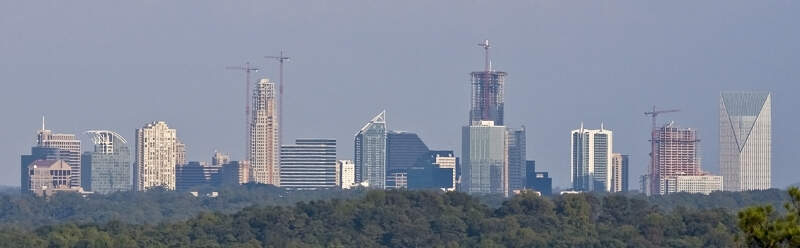

Cost of living
Baltimore is the cheaper city overall — 8% higher in Atlanta than its rival. Index baseline: 100 = national average.
| Living expense | Baltimore | Atlanta | US average |
|---|---|---|---|
| Overall | 109 | 119 | 100 |
| Services | 109 | 99 | 100 |
| Groceries | 114 | 102 | 100 |
| Health | 99 | 163 | 100 |
| Housing | 114 | 100 | 100 |
| Transportation | 112 | 106 | 100 |
| Utilities | 109 | 104 | 100 |
Lower index = cheaper. 100 = U.S. national average. Bar inside each cell scales relative to the highest value in the table.
Sources: HomeSnacks Cost of Living indices, normalized so 100 = U.S. national average. Drill in: Baltimore cost of living, Atlanta cost of living, or the cheapest cities in America.
Housing breakdown
Home prices are higher in Atlanta. Compare absolute price and price-to-income — a $500k home in a $100k-income city is very different from one in a $50k-income city.
| Metric | Baltimore | Atlanta | United States |
|---|---|---|---|
| Median Home Value | $188,101 | $385,599 | $332,700 |
| Median Rent | $1,331 | $1,711 | $1,413 |
| Median Income | $62,177 | $85,652 | $80,734 |
| Home Value To Income | 3.0x | 4.5x | 4.1x |
| Rent To Monthly Income | 0.26x | 0.24x | 0.21x |
Source: U.S. Census Bureau ACS 2020-2024. See also states with the highest rent in America.
Crime
Atlanta is the safer city — total crime rate of 4,600 per 100k people vs 5,763 for Baltimore. US average: 2,119.
| Crime (per 100k) | Baltimore | Atlanta | US average |
|---|---|---|---|
| Total crime | 5,763 | 4,600 | 2,119 |
| Murder | 35 | 26 | 5 |
| Robbery | 573 | 120 | 61 |
| Aggravated Assault | 941 | 537 | 256 |
| Violent Crime | 1,606 | 707 | 359 |
| Burglary | 524 | 347 | 229 |
| Larceny | 2,582 | 2,500 | 1,272 |
| Car Theft | 1,051 | 1,046 | 259 |
| Property Crime | 4,157 | 3,893 | 1,760 |
Lower = safer. Bar inside each cell scales relative to the highest crime rate in the table.
Source: FBI Uniform Crime Reporting (2024). All rates are per 100,000 people. City pages: Baltimore crime, Atlanta crime. See also: safest cities in America.
Diversity
Atlanta is more racially diverse — lower HHI (closer to 0) means a more even mix across groups.
| Group | Baltimore | Atlanta | United States |
|---|---|---|---|
| White | 26.0% | 38.1% | 57.4% |
| African American | 58.5% | 45.4% | 11.9% |
| American Indian | 0.2% | 0.1% | 0.5% |
| Asian | 2.6% | 5.2% | 5.9% |
| Hawaiian | 0.0% | 0.0% | 0.2% |
| Other | 0.6% | 0.5% | 0.6% |
| Two Or More | 3.9% | 4.4% | 4.3% |
| Hispanic | 8.2% | 6.3% | 19.3% |
Source: U.S. Census ACS 2020-2024. Lower HHI = more even racial mix. See also: most diverse cities in America.
SnackAbility — overall quality of life
Atlanta scores higher overall — 7/10 vs 6/10. SnackAbility is our 1–10 quality-of-life score; the median U.S. city scores a 7.
Scores are 0–10; both bars share the same scale.
SnackAbility is a HomeSnacks proprietary 1–10 score blending jobs, housing, education, commute, amenities, affordability, crime, and diversity. Median U.S. city ≈ 7. Data: Census, BLS, FBI. See also: best places to live in America.
Getting around: Baltimore vs. Atlanta
How each city handles commuting, transit, walkability, and car culture — the day-to-day reality that shapes where you'd actually want to live.
Baltimore runs on MTA Maryland's buses, a Metro subway line, and Light Rail between BWI Airport and Hunt Valley. The free Charm City Circulator covers neighborhood hops between Fells Point, Mt. Vernon, and Harbor East without a car. MARC commuter rail is the practical choice if you work in Washington, D.C., with three lines running into Union Station.
Drivers rely on I-95 and I-83, and commute times run about average for a mid-size city.
Atlanta's traffic reputation is well-deserved. The I-285 perimeter and I-85/I-75 interchanges can turn a 10-mile trip into an hour during rush hour. MARTA's rail connects Hartsfield-Jackson Airport, Buckhead, Midtown, and downtown, but coverage beyond that spine is thin.
The BeltLine is expanding and has made some neighborhoods genuinely walkable, but beyond the core you'll be driving most days. For international airport access, Atlanta is the clear choice.
Jobs and careers in Baltimore vs. Atlanta
The local job market, dominant industries, and which city to choose based on your career.
Baltimore's economy runs on large, stable institutions. Johns Hopkins University and Johns Hopkins Medicine are the dominant employers, with the University of Maryland Medical System and a cluster of federal agencies nearby: the NSA, Social Security Administration, and U.S. Cyber Command are all in the metro. Under Armour is headquartered here, and T. Rowe Price has a significant financial presence.
The median household income of $62,177 reflects a job market that rewards healthcare and government work more than high-growth tech.
Atlanta's median household income of $85,652 tells a different story. Coca-Cola, Delta Air Lines, Home Depot, UPS, and Chick-fil-A are all headquartered there, and CNN and Tyler Perry Studios anchor a growing media sector. Georgia Tech's talent pipeline has attracted investment from Microsoft, Apple, and Google, and Emory University supports a solid biomedical research community.
If you're early in your career and want corporate options, Atlanta offers considerably more of them.
Weather and climate
What to expect day-to-day — sun, fog, heat, rain, and the seasonal extremes that shape the lifestyle.
Baltimore sits at the northern edge of the humid subtropical zone, which means four real seasons. Summers hit the upper 80s with serious humidity, and winters bring average lows in the upper 20s with occasional heavy snowstorms. The Chesapeake Bay moderates some extremes, and spring and fall are reliably pleasant.
Atlanta runs warmer year-round. Summer highs crack 90°F regularly from June through September, and winters average lows in the mid-30s, with snow rare enough to shut the city down when it arrives, usually as ice. You'll get a genuine fall foliage season and a spring that comes early.
If you want to skip the heavy coat, Atlanta fits better. Baltimore is the pick if you actually want to see snow a few times a year without moving to New England.
Culture, nightlife, and entertainment
Food, music, neighborhoods, and the city vibe that gives each place its personality.
Baltimore has a distinct, unpretentious identity. The waterfront at Fells Point and the Federal Hill neighborhood stay busy on weekends with bars and crab houses, and Camden Yards is one of the best baseball experiences in the country. The Station North Arts District has a real creative scene: galleries, music venues, and independent theaters.
The National Aquarium and the American Visionary Art Museum are serious cultural draws for a city Baltimore's size. The dining scene goes heavy on seafood; if you eat crabs, you've found the right place.
Atlanta's culture scene is bigger and more varied. Buckhead handles upscale dining and nightlife, while Inman Park, Old Fourth Ward, and Virginia-Highland are packed with locally owned restaurants and bars. The BeltLine Eastside Trail connects many of them on foot.
The High Museum of Art is a serious institution, and Atlanta's central role in American hip-hop history gives it a music culture that still draws talent. With a larger population and higher incomes, Atlanta simply has more: more restaurants, more venues, more events on any given weekend.
Outdoor activities and day trips
Parks, beaches, hikes, and the weekend escapes that define life outside the city limits.
Baltimore's best outdoor asset is water access. The Chesapeake Bay is the backdrop for kayaking, sailing, and fishing, and the Inner Harbor waterfront trail works for an everyday run or bike ride. Patapsco Valley State Park, just west of the city, offers serious hiking and mountain biking through a river gorge.
Day trips are solid: the Appalachian Trail is under two hours away, Shenandoah National Park is a comfortable drive, and Ocean City puts a beach within 2.5 hours. Patterson Park is the neighborhood green space locals treat as a living room.
Atlanta's outdoor scene centers on Piedmont Park in Midtown, a large green space with farmers markets, festivals, and everyday recreation. The Chattahoochee River National Recreation Area has whitewater kayaking, tubing, and trail running within the metro. Stone Mountain Park is a short drive east.
The bigger draw is the Blue Ridge Mountains, roughly 60 to 90 minutes north. Towns like Blue Ridge and Dahlonega offer serious hiking, waterfalls, and wineries on a weekend trip, and the Silver Comet Trail adds 61 miles of paved cycling heading west. If mountains matter, Atlanta's access is better.
Bottom line: which city is right for you?
Based on the head-to-head data above, here's the short version — pick the city that lines up with what you actually care about.
Choose Baltimore if you prioritize…
- a lower cost of living (cheaper groceries, services, and day-to-day expenses).
Choose Atlanta if you prioritize…
- lower crime — a safer place to live, work, and raise a family.
- more affordable housing relative to Baltimore.
- a more racially diverse community (lower HHI on Census data).
- a higher overall SnackAbility quality-of-life score.
Methodology: winners are picked from public data — U.S. Census Bureau ACS (income, home value, rent, race/HHI), FBI Uniform Crime Reporting (crime rates per 100k), and HomeSnacks' proprietary SnackAbility quality-of-life score, which blends Bureau of Labor Statistics data with the above.
Other comparisons
Still weighing your options? See how these two cities stack up against other places we've compared head-to-head.