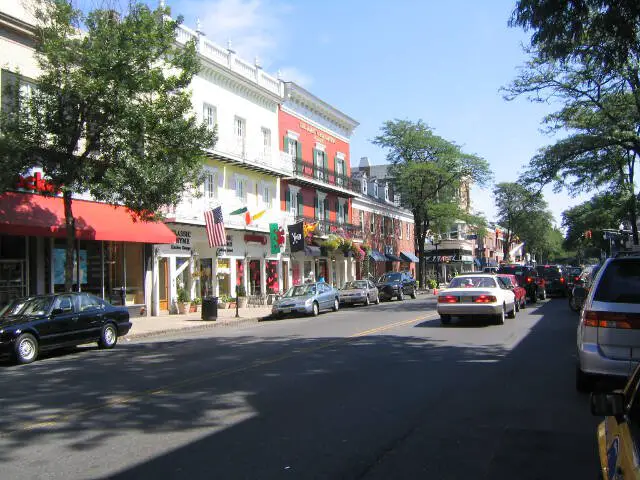
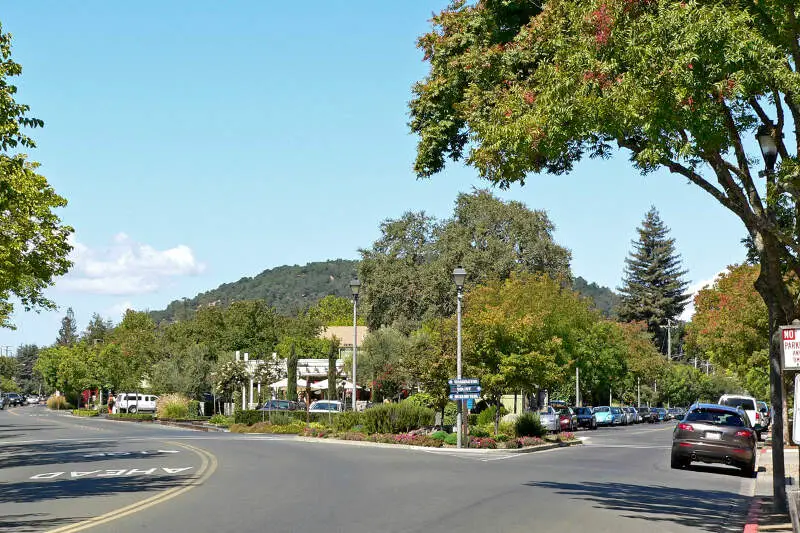
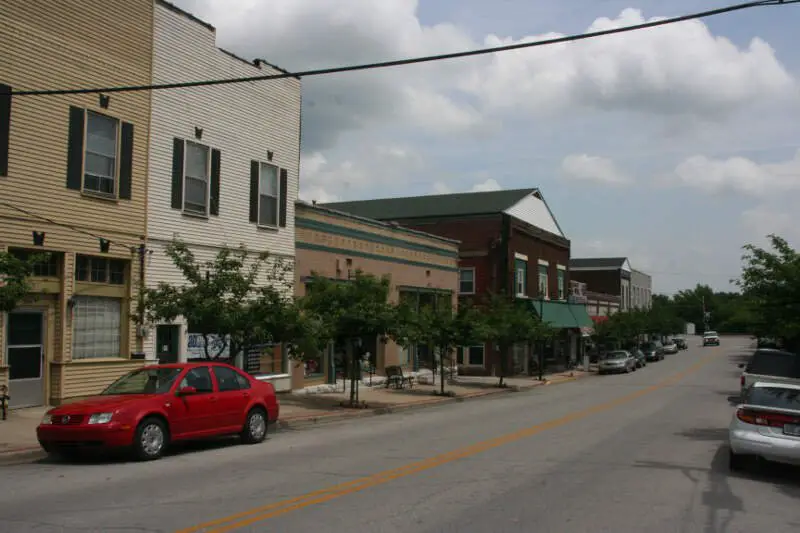
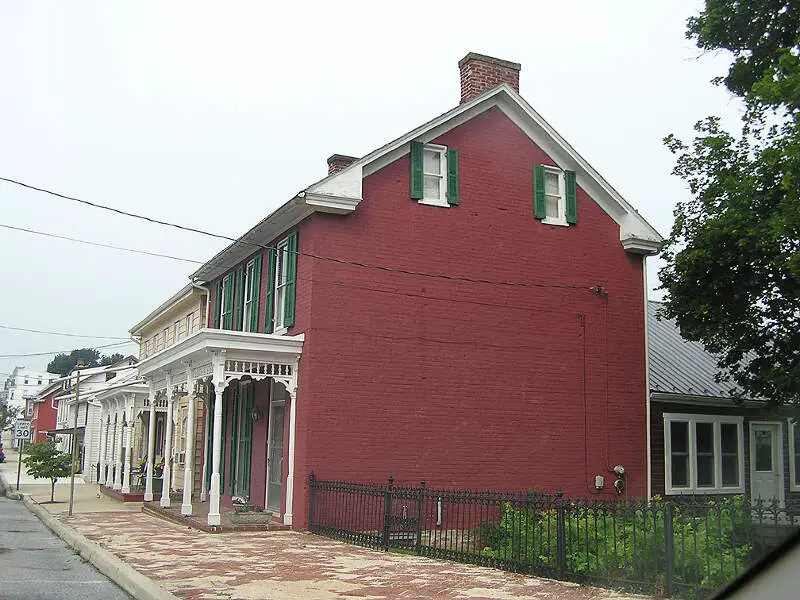
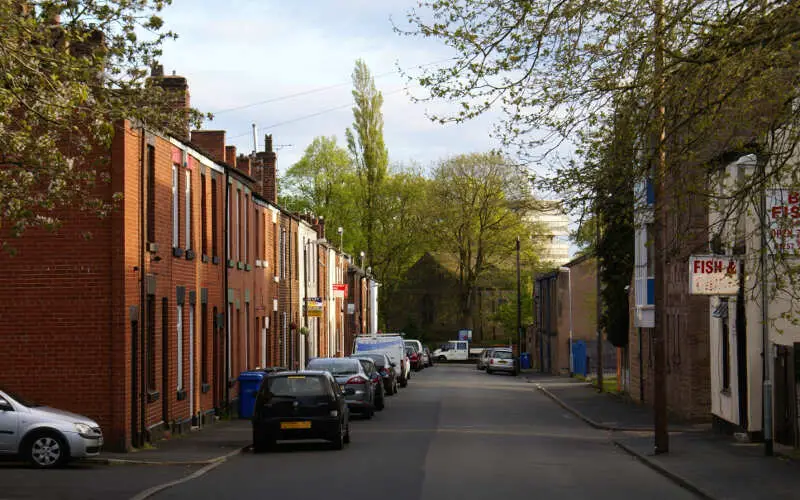
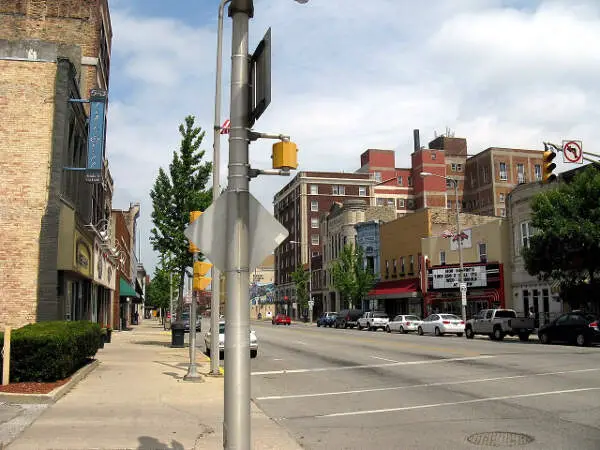
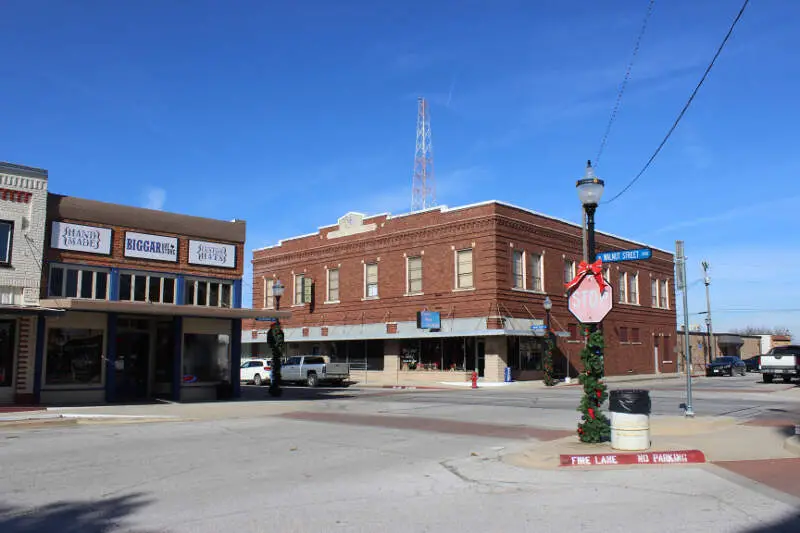
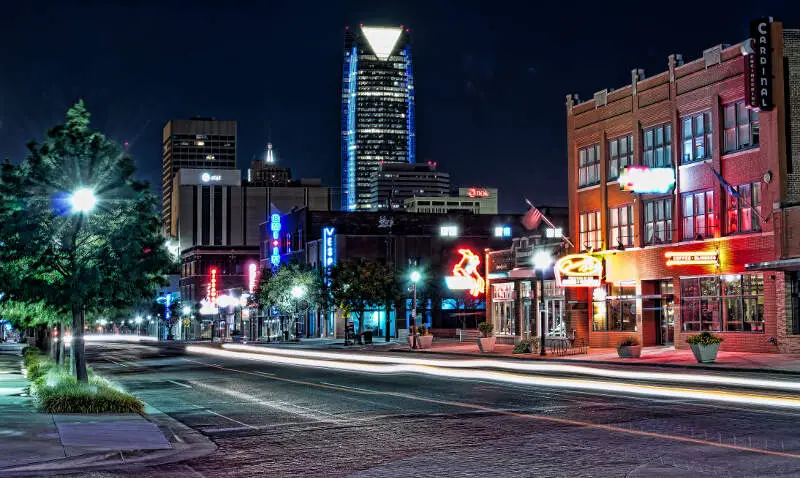
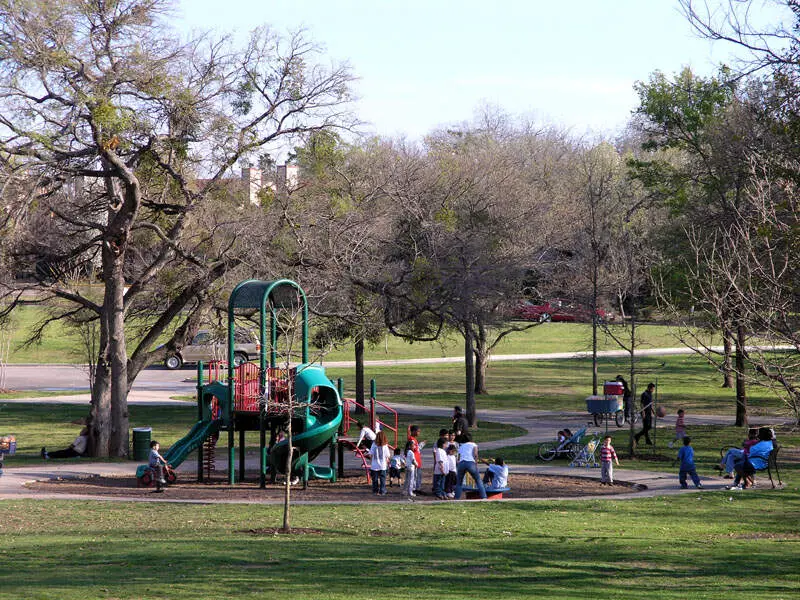
Oklahoma City vs. Dallas in photos
A side-by-side look at each city.


Cost of living
Oklahoma City is the cheaper city overall — 9% higher in Dallas than its rival. Index baseline: 100 = national average.
| Living expense | Oklahoma City | Dallas | US average |
|---|---|---|---|
| Overall | 96 | 106 | 100 |
| Services | 94 | 102 | 100 |
| Groceries | 97 | 103 | 100 |
| Health | 91 | 115 | 100 |
| Housing | 99 | 106 | 100 |
| Transportation | 99 | 108 | 100 |
| Utilities | 96 | 104 | 100 |
Lower index = cheaper. 100 = U.S. national average. Bar inside each cell scales relative to the highest value in the table.
Sources: HomeSnacks Cost of Living indices, normalized so 100 = U.S. national average. Drill in: Oklahoma City cost of living, Dallas cost of living, or the cheapest cities in America.
Housing breakdown
Home prices are higher in Dallas. Compare absolute price and price-to-income — a $500k home in a $100k-income city is very different from one in a $50k-income city.
| Metric | Oklahoma City | Dallas | United States |
|---|---|---|---|
| Median Home Value | $206,712 | $309,420 | $332,700 |
| Median Rent | $1,130 | $1,472 | $1,413 |
| Median Income | $68,656 | $70,518 | $80,734 |
| Home Value To Income | 3.0x | 4.4x | 4.1x |
| Rent To Monthly Income | 0.2x | 0.25x | 0.21x |
Source: U.S. Census Bureau ACS 2020-2024. See also states with the highest rent in America.
Crime
Oklahoma City is the safer city — total crime rate of 3,569 per 100k people vs 4,010 for Dallas. US average: 2,119.
| Crime (per 100k) | Oklahoma City | Dallas | US average |
|---|---|---|---|
| Total crime | 3,569 | 4,010 | 2,119 |
| Murder | 10 | 14 | 5 |
| Robbery | 100 | 169 | 61 |
| Aggravated Assault | 493 | 440 | 256 |
| Violent Crime | 676 | 658 | 359 |
| Burglary | 583 | 464 | 229 |
| Larceny | 1,951 | 1,787 | 1,272 |
| Car Theft | 360 | 1,100 | 259 |
| Property Crime | 2,893 | 3,352 | 1,760 |
Lower = safer. Bar inside each cell scales relative to the highest crime rate in the table.
Source: FBI Uniform Crime Reporting (2024). All rates are per 100,000 people. City pages: Oklahoma City crime, Dallas crime. See also: safest cities in America.
Diversity
Dallas is more racially diverse — lower HHI (closer to 0) means a more even mix across groups.
| Group | Oklahoma City | Dallas | United States |
|---|---|---|---|
| White | 50.1% | 27.6% | 57.4% |
| African American | 13.1% | 22.9% | 11.9% |
| American Indian | 2.1% | 0.2% | 0.5% |
| Asian | 4.5% | 3.8% | 5.9% |
| Hawaiian | 0.1% | 0.1% | 0.2% |
| Other | 0.5% | 0.3% | 0.6% |
| Two Or More | 7.6% | 2.6% | 4.3% |
| Hispanic | 22.1% | 42.6% | 19.3% |
Source: U.S. Census ACS 2020-2024. Lower HHI = more even racial mix. See also: most diverse cities in America.
SnackAbility — overall quality of life
Dallas scores higher overall — 5/10 vs 4/10. SnackAbility is our 1–10 quality-of-life score; the median U.S. city scores a 7.
Scores are 0–10; both bars share the same scale.
SnackAbility is a HomeSnacks proprietary 1–10 score blending jobs, housing, education, commute, amenities, affordability, crime, and diversity. Median U.S. city ≈ 7. Data: Census, BLS, FBI. See also: best places to live in America.
Getting around: Oklahoma City vs. Dallas
How each city handles commuting, transit, walkability, and car culture — the day-to-day reality that shapes where you'd actually want to live.
If you commute by car (and in Oklahoma City, you almost certainly will), you'll find a city built around the highway grid of I-35, I-40, and I-44. EMBARK, OKC's bus system, has grown with dedicated bus rapid transit lines along key corridors, but coverage is thin enough that most residents treat it as a last resort. Parking is cheap and plentiful, and rush hour rarely reaches the gridlock you'd find elsewhere.
Dallas offers meaningfully more. DART's light rail network connects downtown to Uptown, the Cedars, Deep Ellum, and suburban hubs like Plano and Irving, which is useful if you work near a station. The metro is enormous, though, and plenty of Dallas residents still drive everywhere on the LBJ, DNT, and I-35E, where you should expect real congestion during peak hours.
Jobs and careers in Oklahoma City vs. Dallas
The local job market, dominant industries, and which city to choose based on your career.
Oklahoma City's economy leans heavily on energy. Devon Energy and Continental Resources anchor a downtown skyline shaped by oil money, alongside a large healthcare corridor (OU Health, INTEGRIS, Mercy) and the federal government, including Tinker Air Force Base, one of the largest Air Force installations in the country. A cost of living index of 96 (below the US average of 100) and a median household income of $68,656 mean your paycheck stretches reasonably well here.
Dallas runs a more diversified engine: AT&T, Southwest Airlines, Toyota North America, Goldman Sachs, and a fast-growing tech sector all have major presences. The median household income edges up to $70,518, but a cost of living index of 106 and median home values of $309,420 (versus $206,712 in OKC) mean you'll spend more to live there. For career ceiling and sector variety, Dallas is the stronger market.
Weather and climate
What to expect day-to-day — sun, fog, heat, rain, and the seasonal extremes that shape the lifestyle.
Both cities sit in the southern Great Plains and share a punishing summer. Triple-digit heat is routine in OKC by July, and Dallas isn't far behind, frequently topping 100°F with higher humidity.
The real difference is winter and severe weather. Oklahoma City sits firmly in Tornado Alley and sees some of the most active spring storm seasons in the country; May in particular demands a weather radio and a shelter plan. Ice storms can also shut the city down for days.
Dallas gets tornadoes too (the April 2022 outbreak hit the metro hard), but statistically OKC bears more frequent and intense activity. Dallas winters are slightly milder on average, though ice events are still a real hazard.
Neither city offers much in the way of fall color or snow recreation. If you're moving from a northern climate, expect to trade seasons for long, hot summers in both places.
Culture, nightlife, and entertainment
Food, music, neighborhoods, and the city vibe that gives each place its personality.
Oklahoma City has invested heavily in its cultural footprint since the MAPS sales-tax projects began in the 1990s. Bricktown anchors the entertainment district along the canal, while Automobile Alley and the Midtown corridor have developed serious restaurant and bar scenes. The Oklahoma City Museum of Art, the National Cowboy and Western Heritage Museum, and Paycom Center (home to the NBA Thunder) give the city genuine anchors beyond typical mid-size fare.
Dallas operates at a different scale. Deep Ellum is one of the best live-music neighborhoods in Texas, the Arts District is among the largest contiguous urban arts districts in the country (Nasher Sculpture Center, Winspear Opera House, AT&T Performing Arts Center), and Bishop Arts has become a nationally recognized dining destination.
If nightlife variety, major touring acts, and culinary depth matter to your decision, Dallas offers considerably more, but the rent reflects it: $1,472 median versus $1,130 in OKC.
Outdoor activities and day trips
Parks, beaches, hikes, and the weekend escapes that define life outside the city limits.
Oklahoma City is flatter than its reputation suggests, but the outdoors scene has grown considerably. Scissortail Park, a 70-acre green space downtown, opened in 2019 and hosts everything from farmers markets to kayaking on its pond. Lake Hefner and Lake Overholser offer sailing, cycling, and fishing close to the city core.
For a day trip, the Wichita Mountains Wildlife Refuge (about 90 minutes southwest) delivers bison herds, granite peaks, and legitimate hiking.
Dallas leans on White Rock Lake for cycling and paddling, and Klyde Warren Park anchors downtown outdoor life. Lake Ray Hubbard and Lake Lewisville expand water recreation options significantly.
The terrain is equally flat, but the sheer size of the metro means more trail miles and more parks overall. Neither city competes with mountain destinations, but if proximity to Hill Country or the Red River is appealing, Dallas puts you closer to a wider range of weekend escapes.
Bottom line: which city is right for you?
Based on the head-to-head data above, here's the short version — pick the city that lines up with what you actually care about.
Choose Oklahoma City if you prioritize…
- a lower cost of living (cheaper groceries, services, and day-to-day expenses).
- lower crime — a safer place to live, work, and raise a family.
Choose Dallas if you prioritize…
- more affordable housing relative to Oklahoma City.
- a more racially diverse community (lower HHI on Census data).
- a higher overall SnackAbility quality-of-life score.
Methodology: winners are picked from public data — U.S. Census Bureau ACS (income, home value, rent, race/HHI), FBI Uniform Crime Reporting (crime rates per 100k), and HomeSnacks' proprietary SnackAbility quality-of-life score, which blends Bureau of Labor Statistics data with the above.
Other comparisons
Still weighing your options? See how these two cities stack up against other places we've compared head-to-head.