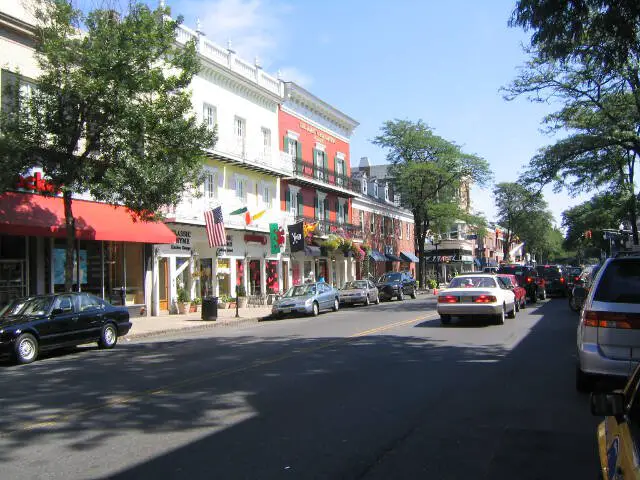
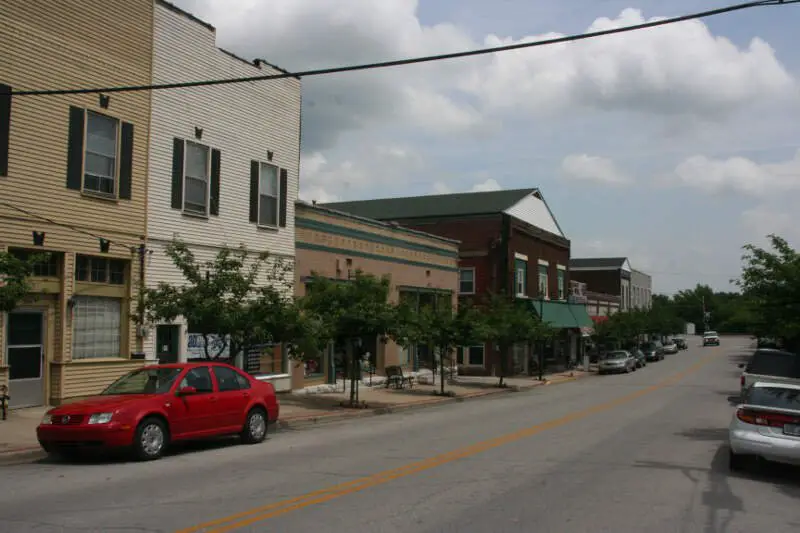
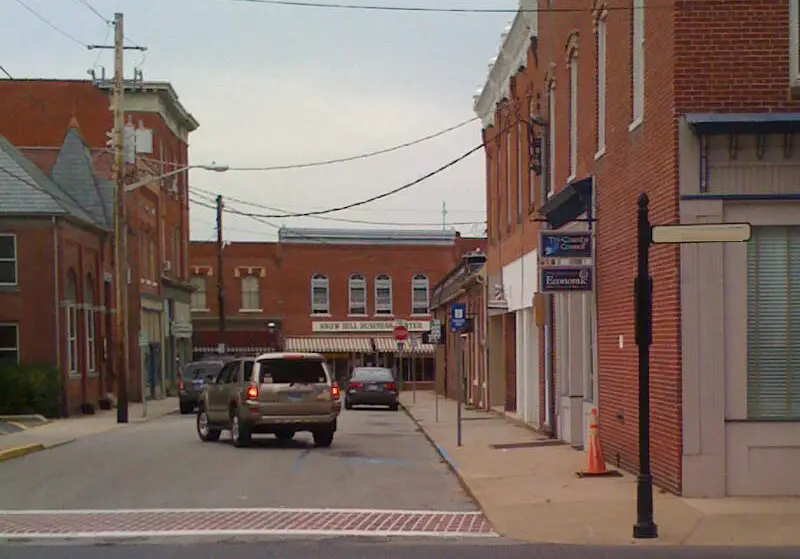
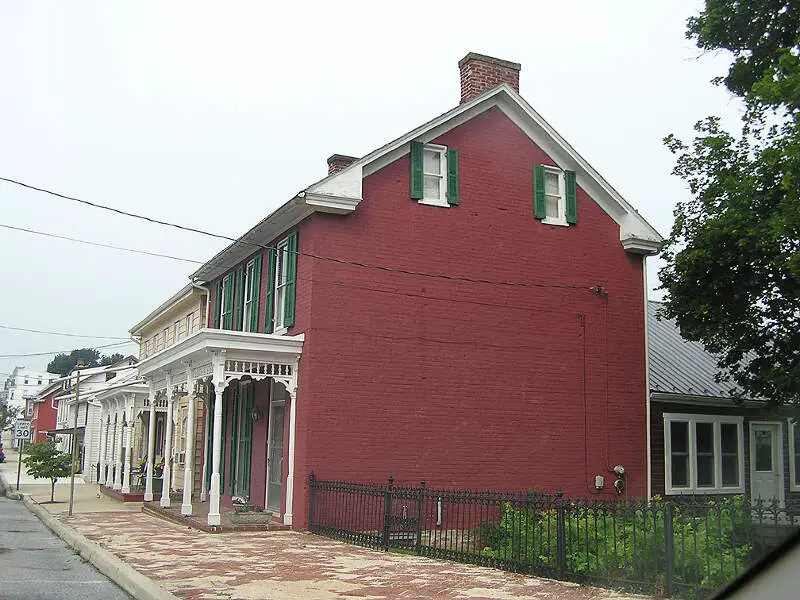
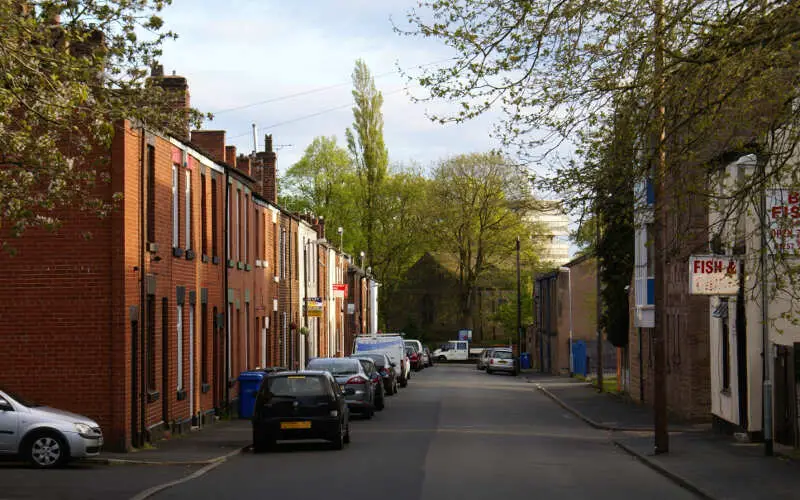
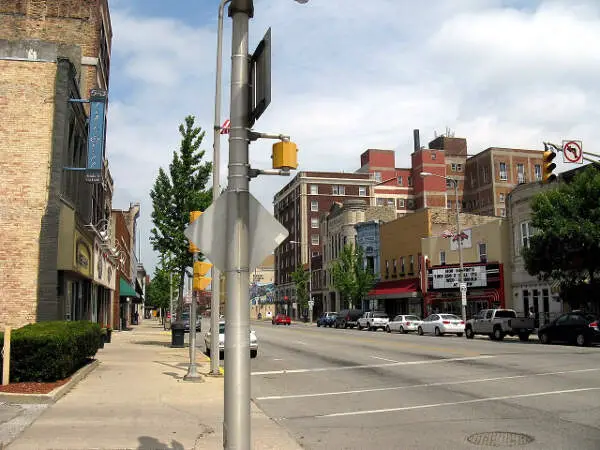
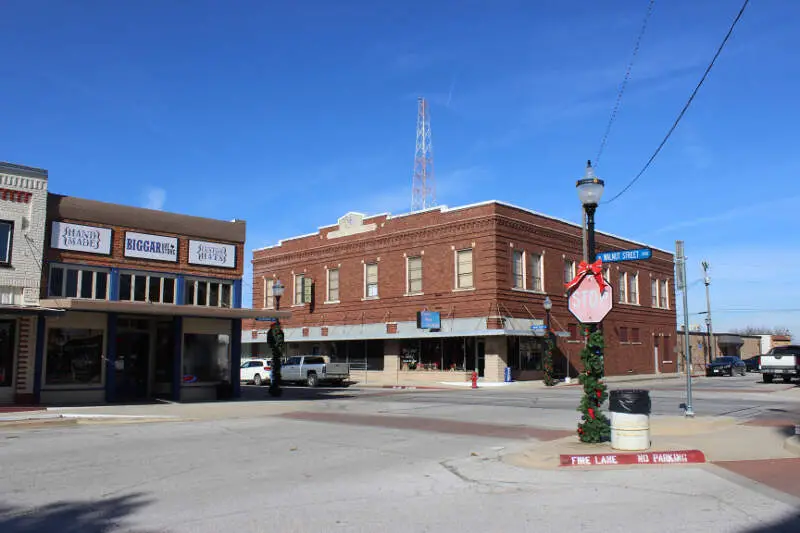
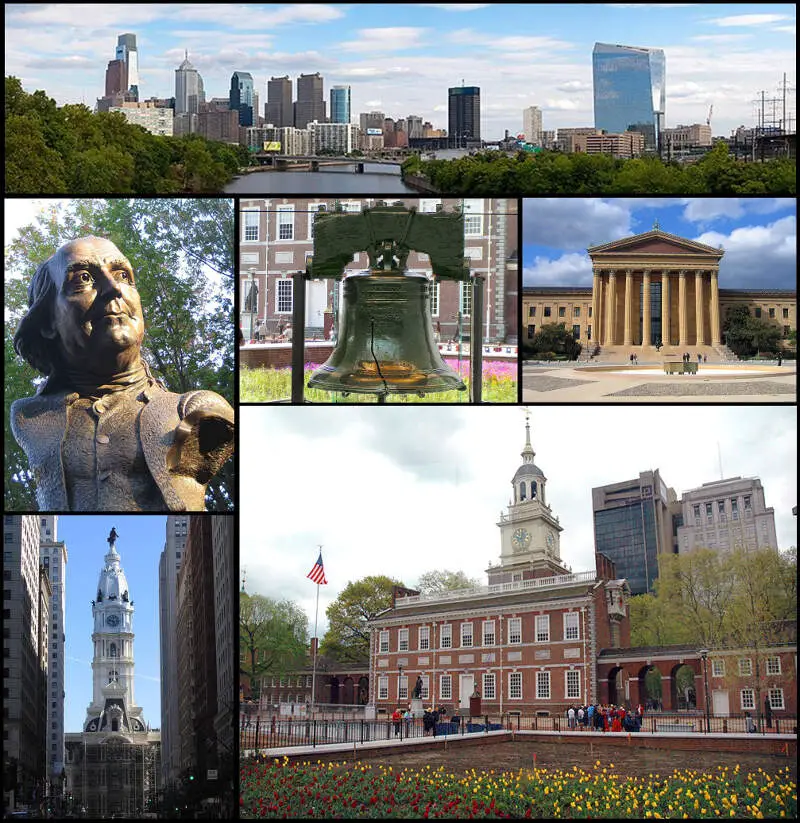
Philadelphia vs. Cincinnati in photos
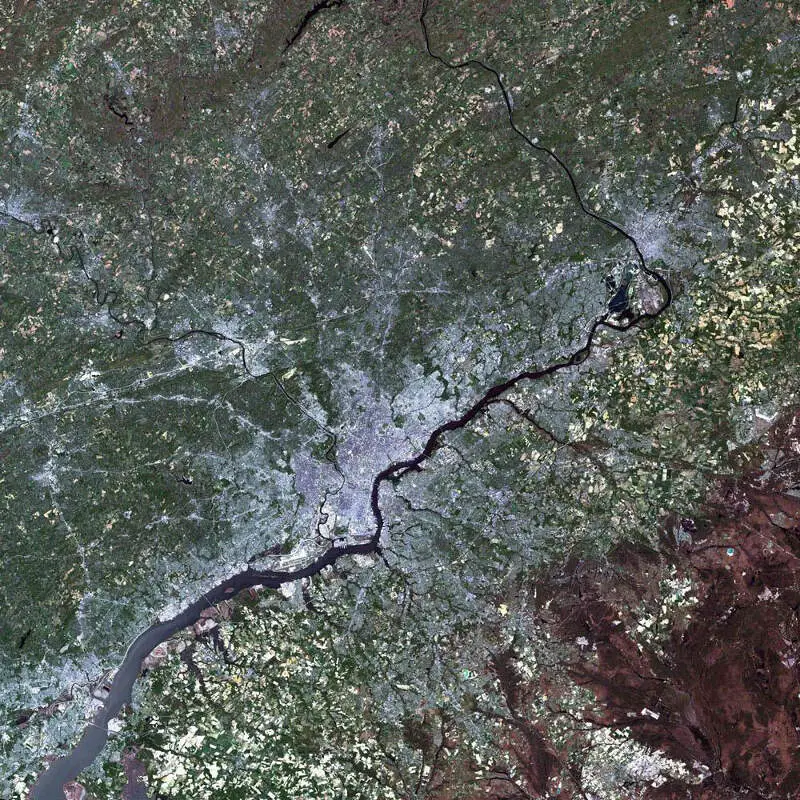
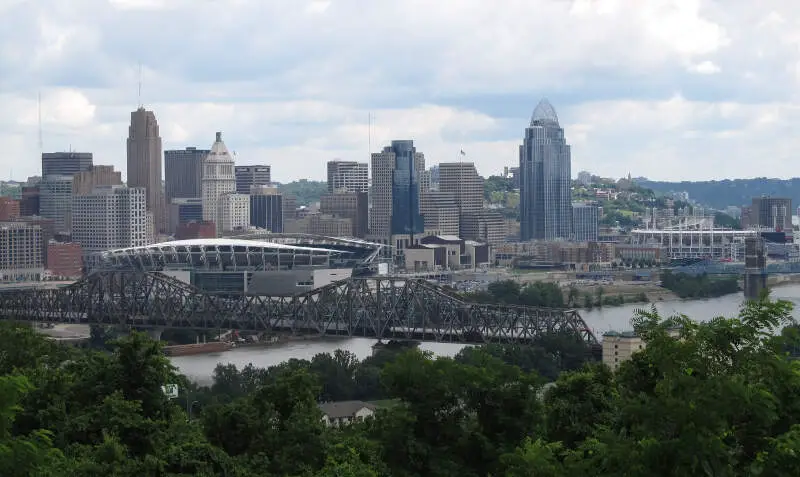
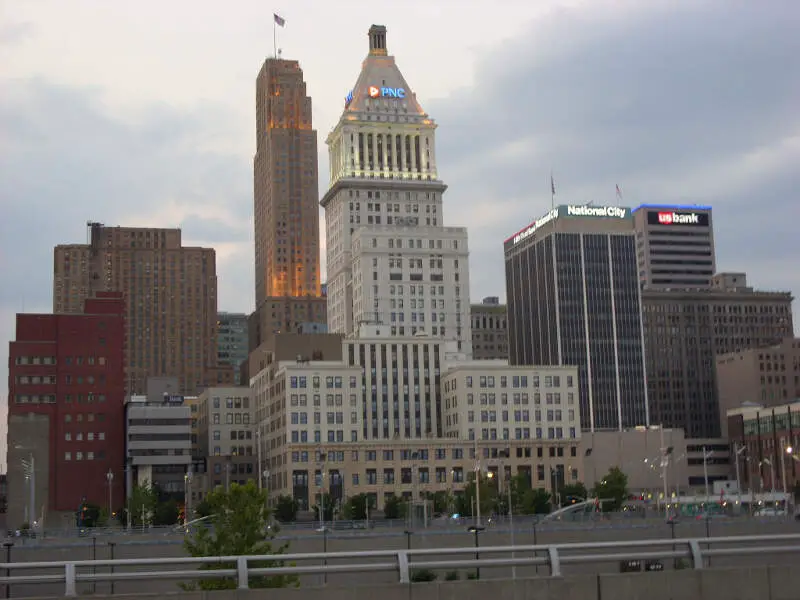
A side-by-side look at each city.


Cost of living
Cincinnati is the cheaper city overall — 10% higher in Philadelphia than its rival. Index baseline: 100 = national average.
| Living expense | Philadelphia | Cincinnati | US average |
|---|---|---|---|
| Overall | 103 | 94 | 100 |
| Services | 103 | 98 | 100 |
| Groceries | 100 | 99 | 100 |
| Health | 101 | 82 | 100 |
| Housing | 107 | 98 | 100 |
| Transportation | 99 | 96 | 100 |
| Utilities | 112 | 97 | 100 |
Lower index = cheaper. 100 = U.S. national average. Bar inside each cell scales relative to the highest value in the table.
Sources: HomeSnacks Cost of Living indices, normalized so 100 = U.S. national average. Drill in: Philadelphia cost of living, Cincinnati cost of living, or the cheapest cities in America.
Housing breakdown
Home prices are higher in Cincinnati. Compare absolute price and price-to-income — a $500k home in a $100k-income city is very different from one in a $50k-income city.
| Metric | Philadelphia | Cincinnati | United States |
|---|---|---|---|
| Median Home Value | $231,814 | $249,567 | $332,700 |
| Median Rent | $1,397 | $1,001 | $1,413 |
| Median Income | $61,953 | $52,909 | $80,734 |
| Home Value To Income | 3.7x | 4.7x | 4.1x |
| Rent To Monthly Income | 0.27x | 0.23x | 0.21x |
Source: U.S. Census Bureau ACS 2020-2024. See also states with the highest rent in America.
Crime
Cincinnati is the safer city — total crime rate of 4,675 per 100k people vs 5,457 for Philadelphia. US average: 2,119.
| Crime (per 100k) | Philadelphia | Cincinnati | US average |
|---|---|---|---|
| Total crime | 5,457 | 4,675 | 2,119 |
| Murder | 17 | 22 | 5 |
| Robbery | 273 | 232 | 61 |
| Aggravated Assault | 572 | 535 | 256 |
| Violent Crime | 909 | 846 | 359 |
| Burglary | 319 | 548 | 229 |
| Larceny | 3,224 | 2,395 | 1,272 |
| Car Theft | 1,006 | 886 | 259 |
| Property Crime | 4,548 | 3,829 | 1,760 |
Lower = safer. Bar inside each cell scales relative to the highest crime rate in the table.
Source: FBI Uniform Crime Reporting (2024). All rates are per 100,000 people. City pages: Philadelphia crime, Cincinnati crime. See also: safest cities in America.
Diversity
Philadelphia is more racially diverse — lower HHI (closer to 0) means a more even mix across groups.
| Group | Philadelphia | Cincinnati | United States |
|---|---|---|---|
| White | 33.2% | 48.2% | 57.4% |
| African American | 38.3% | 36.3% | 11.9% |
| American Indian | 0.1% | 0.1% | 0.5% |
| Asian | 7.9% | 2.6% | 5.9% |
| Hawaiian | 0.0% | 0.0% | 0.2% |
| Other | 0.8% | 0.8% | 0.6% |
| Two Or More | 4.1% | 5.9% | 4.3% |
| Hispanic | 15.6% | 6.1% | 19.3% |
Source: U.S. Census ACS 2020-2024. Lower HHI = more even racial mix. See also: most diverse cities in America.
SnackAbility — overall quality of life
Philadelphia scores higher overall — 6/10 vs 5/10. SnackAbility is our 1–10 quality-of-life score; the median U.S. city scores a 7.
Scores are 0–10; both bars share the same scale.
SnackAbility is a HomeSnacks proprietary 1–10 score blending jobs, housing, education, commute, amenities, affordability, crime, and diversity. Median U.S. city ≈ 7. Data: Census, BLS, FBI. See also: best places to live in America.
Getting around: Philadelphia vs. Cincinnati
How each city handles commuting, transit, walkability, and car culture — the day-to-day reality that shapes where you'd actually want to live.
Philadelphia's SEPTA gives you genuine car-free options that Cincinnati simply cannot match. The Market-Frankford Line and Broad Street Line cover a lot of ground, and regional rail reaches suburbs from Wilmington to Doylestown. Amtrak's 30th Street Station puts New York City about 70 minutes away, which matters if you travel for work.
SEPTA is aging and delays are common, and Center City parking can run $25-plus a day, so driving has real costs too.
Cincinnati is a car city. The Metro bus network exists but coverage is thin outside the urban core, and the Cincinnati Bell Connector streetcar covers only a narrow downtown loop. If you live in Hyde Park, Mount Lookout, or any of the hillside neighborhoods, you're almost certainly commuting by car.
Traffic is far lighter than Philadelphia's, though, and parking downtown rarely breaks the bank.
Jobs and careers in Philadelphia vs. Cincinnati
The local job market, dominant industries, and which city to choose based on your career.
Philadelphia has strong large-employer diversity. Comcast is headquartered here, and healthcare and education dominate the job market: Penn Medicine, Jefferson Health, Children's Hospital of Philadelphia, Drexel, and Temple are all major year-round employers. The city also has a growing life-sciences corridor in University City.
Median household income sits at $61,953, and the broader metro pulls in finance and consulting firms concentrated along Market Street. A cost of living index of 103 means you're paying very slightly above the national average for those wages.
Cincinnati has its own Fortune 500 anchors: Procter & Gamble and Kroger are both headquartered here, and Fifth Third Bank and Cincinnati Children's Hospital Medical Center round out a solid base. Median household income of $52,909 is lower, but a cost of living index of 94 gives that paycheck more actual purchasing power, which matters when you're comparing day-to-day expenses.
Weather and climate
What to expect day-to-day — sun, fog, heat, rain, and the seasonal extremes that shape the lifestyle.
Philadelphia sits in a climate transition zone — humid continental with a hint of Mid-Atlantic moderation from the coast. Summers get genuinely hot and sticky, with July highs typically in the upper 80s. Winters bring real cold and real snow, though a major blizzard is an occasional event rather than an annual certainty.
Spring and fall are genuinely pleasant, and the city sees more sun than most people expect from the Northeast.
Cincinnati runs a bit more continental: colder winter lows, Ohio River valley fog in December and January, and a noticeable thunderstorm season in spring. Summer temperatures are similar to Philadelphia's but often feel muggier. Neither city is extreme by Midwest or Northeast standards.
If you're choosing partly on weather, Philadelphia's slightly milder winters and proximity to the coast give it a modest edge. Expect roughly comparable gray stretches in both cities between November and March.
Culture, nightlife, and entertainment
Food, music, neighborhoods, and the city vibe that gives each place its personality.
Philadelphia's cultural footprint is hard to overstate for a city of 1.58 million. The Museum of Art, the Barnes Foundation, and the Reading Terminal Market are genuine national draws, and neighborhoods like Fishtown, Old City, and East Passyunk have developed dense, walkable dining and bar scenes that hold up against any city in the country. South Philly's Italian Market, the concert venues in Center City, and a fierce sports culture around the Eagles and Phillies make for a city with a strong identity.
Cincinnati surprises people, especially Over-the-Rhine, which has been cited nationally as one of the most successful urban neighborhood revivals in the U.S. The density of craft breweries, independent restaurants, and live music venues in OTR punches well above what a city of 311,224 should be able to sustain. The Cincinnati Art Museum offers free general admission, Music Hall is a stunning restored venue, and the Reds and Bengals keep sports energy alive downtown.
Outdoor activities and day trips
Parks, beaches, hikes, and the weekend escapes that define life outside the city limits.
Fairmount Park is one of the largest urban park systems in the country, and it runs right through Philadelphia — the Wissahickon Valley section alone offers miles of gorge trails that feel surprisingly wild for a city this size. The Schuylkill River Trail connects downtown to the suburbs by bike, and the Jersey Shore beaches, Delaware Water Gap, and the Pocono Mountains are all reachable for a weekend without serious driving. With median rent at $1,397, you're paying for that East Coast access.
Cincinnati has its own strong outdoor card to play. Eden Park overlooks the Ohio River, and Mount Airy Forest is one of the largest municipal forests in the U.S.
The Little Miami Scenic Trail is a favorite among cyclists and runners. Perhaps the biggest advantage: Red River Gorge in Kentucky and Hocking Hills State Park in Ohio are both under two hours away, offering sandstone arches and waterfalls that no Philadelphia day trip can easily match.
Bottom line: which city is right for you?
Based on the head-to-head data above, here's the short version — pick the city that lines up with what you actually care about.
Choose Philadelphia if you prioritize…
- a more racially diverse community (lower HHI on Census data).
- a higher overall SnackAbility quality-of-life score.
Choose Cincinnati if you prioritize…
- a lower cost of living (cheaper groceries, services, and day-to-day expenses).
- lower crime — a safer place to live, work, and raise a family.
- more affordable housing relative to Philadelphia.
Methodology: winners are picked from public data — U.S. Census Bureau ACS (income, home value, rent, race/HHI), FBI Uniform Crime Reporting (crime rates per 100k), and HomeSnacks' proprietary SnackAbility quality-of-life score, which blends Bureau of Labor Statistics data with the above.
Other comparisons
Still weighing your options? See how these two cities stack up against other places we've compared head-to-head.