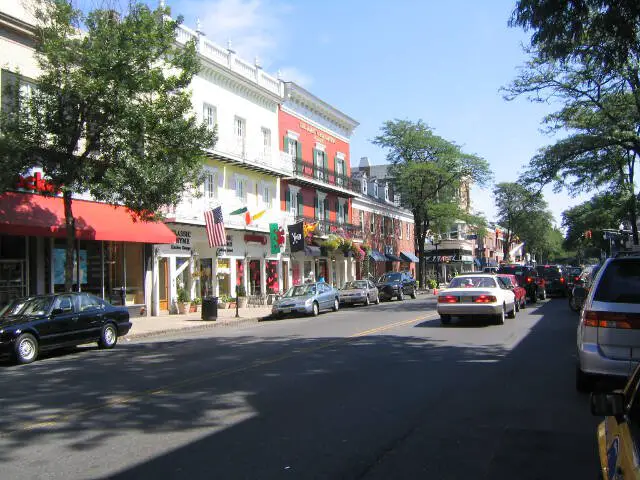
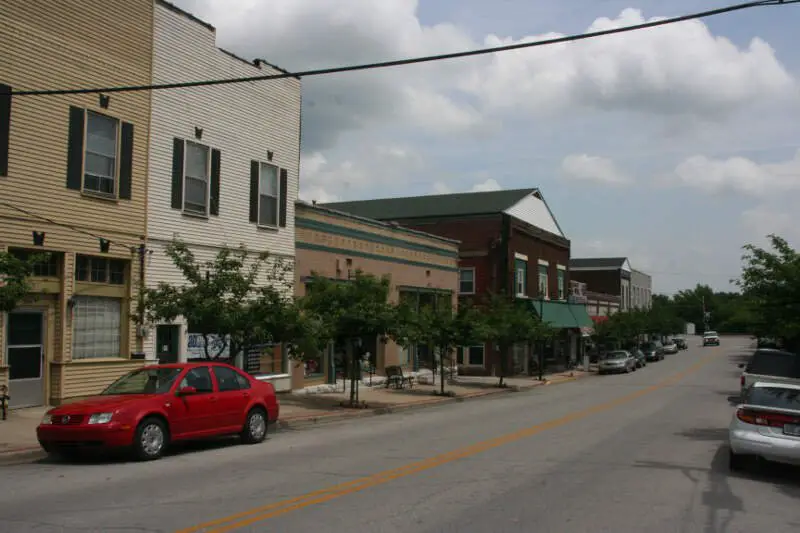
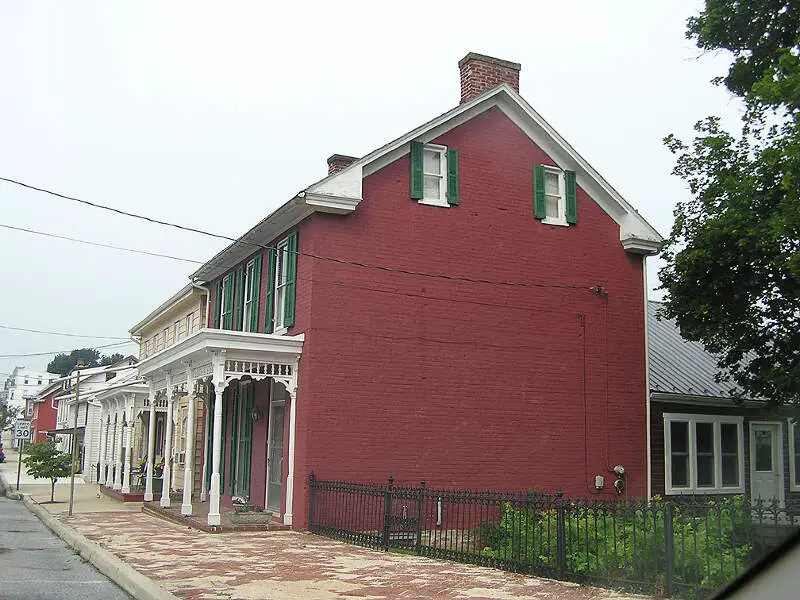
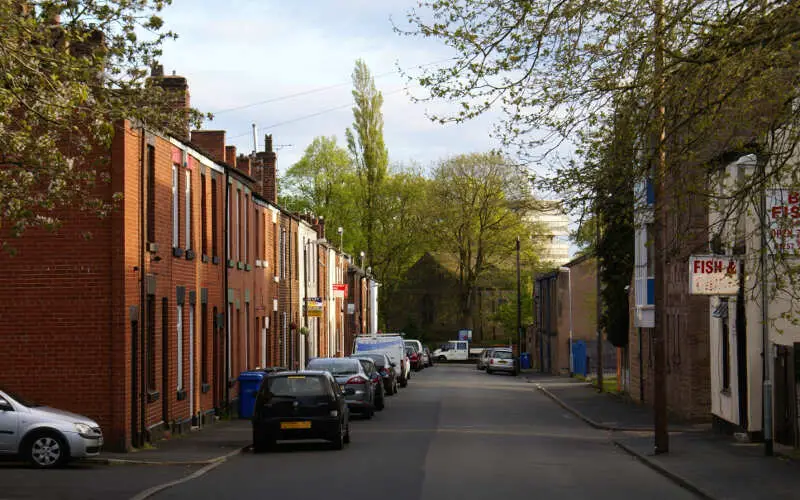
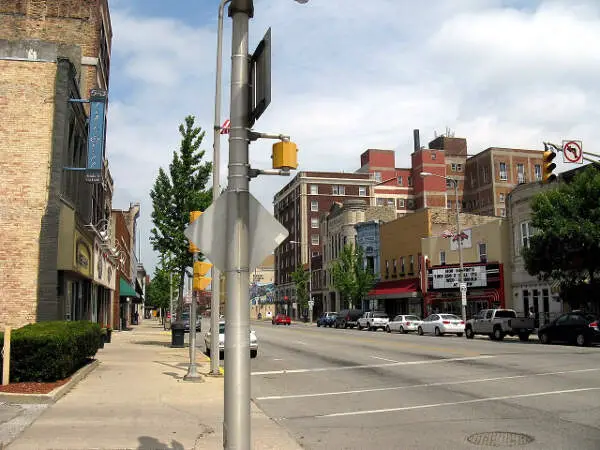
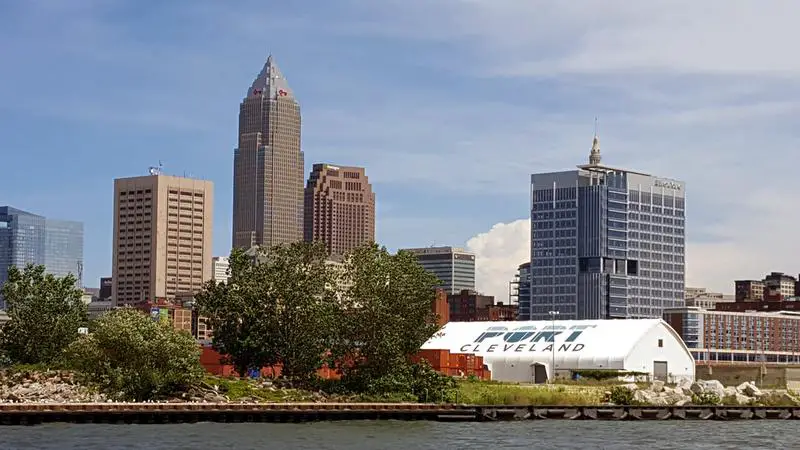
Cleveland vs. Cincinnati in photos
A side-by-side look at each city.





Cost of living
Cleveland is the cheaper city overall — 15% higher in Cincinnati than its rival. Index baseline: 100 = national average.
| Living expense | Cleveland | Cincinnati | US average |
|---|---|---|---|
| Overall | 80 | 94 | 100 |
| Services | 96 | 98 | 100 |
| Groceries | 91 | 99 | 100 |
| Health | 48 | 82 | 100 |
| Housing | 91 | 98 | 100 |
| Transportation | 98 | 96 | 100 |
| Utilities | 97 | 97 | 100 |
Lower index = cheaper. 100 = U.S. national average. Bar inside each cell scales relative to the highest value in the table.
Sources: HomeSnacks Cost of Living indices, normalized so 100 = U.S. national average. Drill in: Cleveland cost of living, Cincinnati cost of living, or the cheapest cities in America.
Housing breakdown
Home prices are higher in Cincinnati. Compare absolute price and price-to-income — a $500k home in a $100k-income city is very different from one in a $50k-income city.
| Metric | Cleveland | Cincinnati | United States |
|---|---|---|---|
| Median Home Value | $115,536 | $249,567 | $332,700 |
| Median Rent | $945 | $1,001 | $1,413 |
| Median Income | $40,801 | $52,909 | $80,734 |
| Home Value To Income | 2.8x | 4.7x | 4.1x |
| Rent To Monthly Income | 0.28x | 0.23x | 0.21x |
Source: U.S. Census Bureau ACS 2020-2024. See also states with the highest rent in America.
Crime
Cincinnati is the safer city — total crime rate of 4,675 per 100k people vs 5,987 for Cleveland. US average: 2,119.
| Crime (per 100k) | Cleveland | Cincinnati | US average |
|---|---|---|---|
| Total crime | 5,987 | 4,675 | 2,119 |
| Murder | 30 | 22 | 5 |
| Robbery | 389 | 232 | 61 |
| Aggravated Assault | 1,001 | 535 | 256 |
| Violent Crime | 1,561 | 846 | 359 |
| Burglary | 860 | 548 | 229 |
| Larceny | 2,419 | 2,395 | 1,272 |
| Car Theft | 1,146 | 886 | 259 |
| Property Crime | 4,426 | 3,829 | 1,760 |
Lower = safer. Bar inside each cell scales relative to the highest crime rate in the table.
Source: FBI Uniform Crime Reporting (2024). All rates are per 100,000 people. City pages: Cleveland crime, Cincinnati crime. See also: safest cities in America.
Diversity
Cleveland is more racially diverse — lower HHI (closer to 0) means a more even mix across groups.
| Group | Cleveland | Cincinnati | United States |
|---|---|---|---|
| White | 33.7% | 48.2% | 57.4% |
| African American | 45.1% | 36.3% | 11.9% |
| American Indian | 0.1% | 0.1% | 0.5% |
| Asian | 2.6% | 2.6% | 5.9% |
| Hawaiian | 0.0% | 0.0% | 0.2% |
| Other | 0.6% | 0.8% | 0.6% |
| Two Or More | 4.6% | 5.9% | 4.3% |
| Hispanic | 13.2% | 6.1% | 19.3% |
Source: U.S. Census ACS 2020-2024. Lower HHI = more even racial mix. See also: most diverse cities in America.
SnackAbility — overall quality of life
Cincinnati scores higher overall — 5/10 vs 3/10. SnackAbility is our 1–10 quality-of-life score; the median U.S. city scores a 7.
Scores are 0–10; both bars share the same scale.
SnackAbility is a HomeSnacks proprietary 1–10 score blending jobs, housing, education, commute, amenities, affordability, crime, and diversity. Median U.S. city ≈ 7. Data: Census, BLS, FBI. See also: best places to live in America.
Getting around: Cleveland vs. Cincinnati
How each city handles commuting, transit, walkability, and car culture — the day-to-day reality that shapes where you'd actually want to live.
Cleveland's Greater Cleveland Regional Transit Authority (RTA) runs light rail on three lines: the Red Line connects downtown to University Circle and the airport, while the Blue and Green lines push toward the east-side suburbs. The HealthLine BRT along Euclid Avenue is one of the more useful rapid routes in Ohio. Most Clevelanders still drive, though, and with a cost of living index of 80, parking and gas stay affordable.
Cincinnati leans harder on the car. The Cincinnati Metro bus network covers the city but frequency is inconsistent, and the Cincinnati Bell Connector streetcar loop downtown is more a tourist draw than a daily commuter tool. Neighborhoods like Over-the-Rhine and Mount Adams are walkable once you're there, but getting between Cincinnati's hills and neighborhoods without a car takes real planning, and Cleveland's rail footprint gives it a modest edge on commute flexibility.
Jobs and careers in Cleveland vs. Cincinnati
The local job market, dominant industries, and which city to choose based on your career.
Cleveland's median household income of $40,801 is noticeably below Cincinnati's $52,909. Cleveland has a manufacturing and logistics base, but the dominant employers are in healthcare and finance: Cleveland Clinic is one of the largest employers in the state, alongside University Hospitals, KeyBank, and Progressive Insurance. Sherwin-Williams opened a new global headquarters downtown in recent years.
Cincinnati has a denser cluster of Fortune 500 companies: Procter & Gamble, Kroger, and Fifth Third Bank are all headquartered here, and Cincinnati Children's Hospital Medical Center draws biomedical and research talent. That corporate concentration pushes wages up across professional services, marketing, and supply chain roles. If you're in a white-collar field, Cincinnati's income numbers and employer roster make a stronger case.
Weather and climate
What to expect day-to-day — sun, fog, heat, rain, and the seasonal extremes that shape the lifestyle.
Cleveland sits on the southern shore of Lake Erie, and lake-effect snow is a real part of winter life: some east-side suburbs regularly see over 100 inches per year, and even the city proper can get buried. Summers are genuinely pleasant, warm and green, and less humid than you'd expect. Spring and fall are short but striking, especially along the Cuyahoga Valley corridor.
Cincinnati sits about 250 miles south and inland, which cuts its average snowfall roughly in half. The lake-effect factor is gone, but the tradeoff is summer: July and August in Cincinnati are hot and muggy, more characteristic of the Upper South than the Great Lakes. If you're choosing based on climate, it comes down to whether you'd rather shovel more or sweat more — Cincinnati's winters are meaningfully milder, but its summers are harder.
Culture, nightlife, and entertainment
Food, music, neighborhoods, and the city vibe that gives each place its personality.
Cleveland punches above its weight culturally. Playhouse Square is the second-largest performing arts complex in the country outside New York, the Cleveland Museum of Art has free general admission, and the Rock and Roll Hall of Fame draws visitors year-round. The West 6th Street corridor and the neighborhoods of Ohio City and Tremont drive the bar and restaurant scene, with Ohio City built around craft beer, local chefs, and the West Side Market as a social anchor.
Cincinnati's Over-the-Rhine is one of the most intact 19th-century urban districts in the country, and its revival over the past decade turned it into a genuine destination — dense with independent bars, wine bars, and restaurants along Main and Vine Streets. The Cincinnati Art Museum, Cincinnati Symphony, and the Aronoff Center round out the arts calendar. Both cities support their NFL, MLB, and NBA teams with real loyalty; choosing between them is mostly a question of whether you'd rather end up a Browns fan or a Bengals fan.
Outdoor activities and day trips
Parks, beaches, hikes, and the weekend escapes that define life outside the city limits.
Cleveland's biggest outdoor asset is Cuyahoga Valley National Park, a 33,000-acre stretch of trails, waterfalls, and the Cuyahoga River sitting almost entirely between Cleveland and Akron. You can be on a serious hiking trail within 30 minutes of downtown. The Cleveland Metroparks "Emerald Necklace" adds a ring of well-maintained green space around the city, and Edgewater Park on Lake Erie gives you swimming and kayaking in summer.
Cincinnati's outdoor options reflect the Ohio River valley topography and its proximity to Kentucky. Eden Park and the Cincinnati Nature Center cover local needs, but the Red River Gorge in Kentucky (a world-class climbing and hiking destination) is about 90 minutes away, a day trip Cleveland can't match. Cincinnati's hillier terrain also makes for better road cycling and trail running within the city limits.
Bottom line: which city is right for you?
Based on the head-to-head data above, here's the short version — pick the city that lines up with what you actually care about.
Choose Cleveland if you prioritize…
- a lower cost of living (cheaper groceries, services, and day-to-day expenses).
- a more racially diverse community (lower HHI on Census data).
Choose Cincinnati if you prioritize…
- lower crime — a safer place to live, work, and raise a family.
- more affordable housing relative to Cleveland.
- a higher overall SnackAbility quality-of-life score.
Methodology: winners are picked from public data — U.S. Census Bureau ACS (income, home value, rent, race/HHI), FBI Uniform Crime Reporting (crime rates per 100k), and HomeSnacks' proprietary SnackAbility quality-of-life score, which blends Bureau of Labor Statistics data with the above.
Other comparisons
Still weighing your options? See how these two cities stack up against other places we've compared head-to-head.