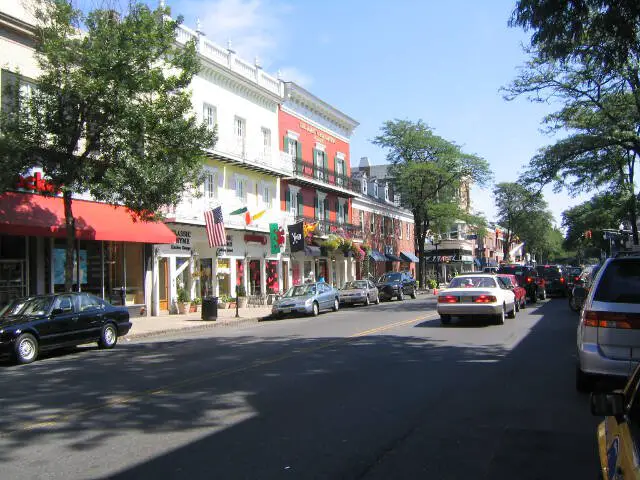
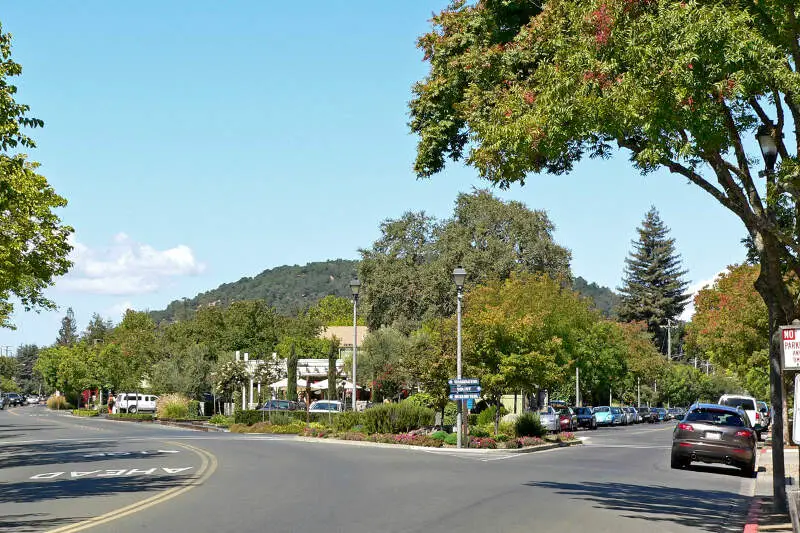
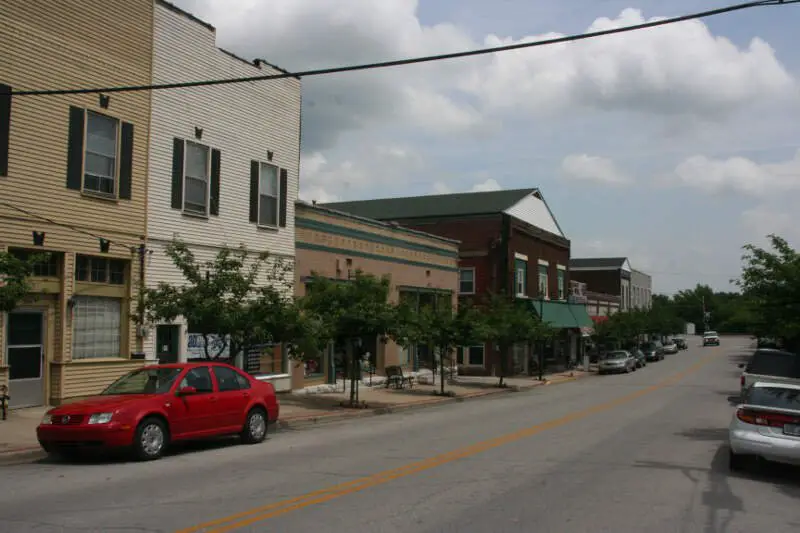
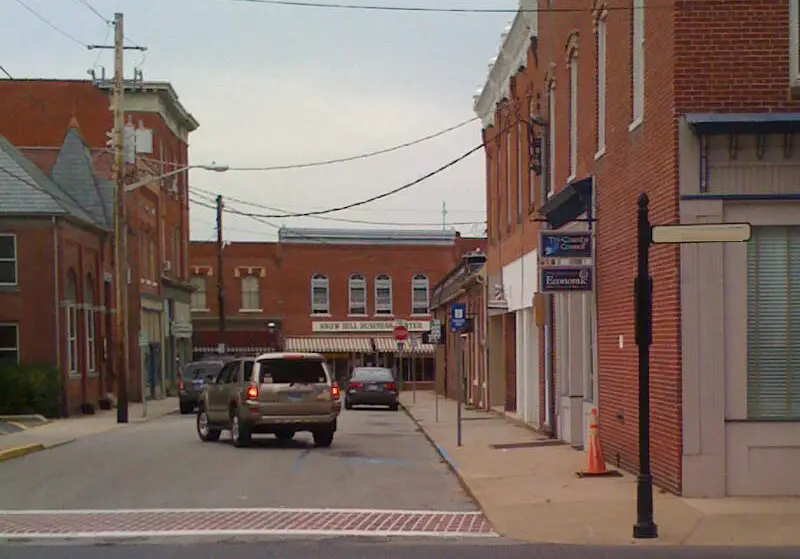
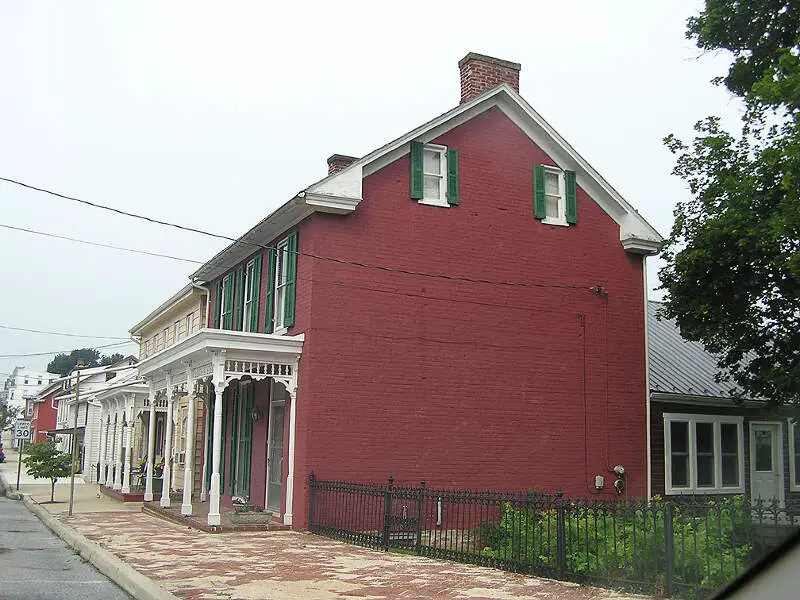
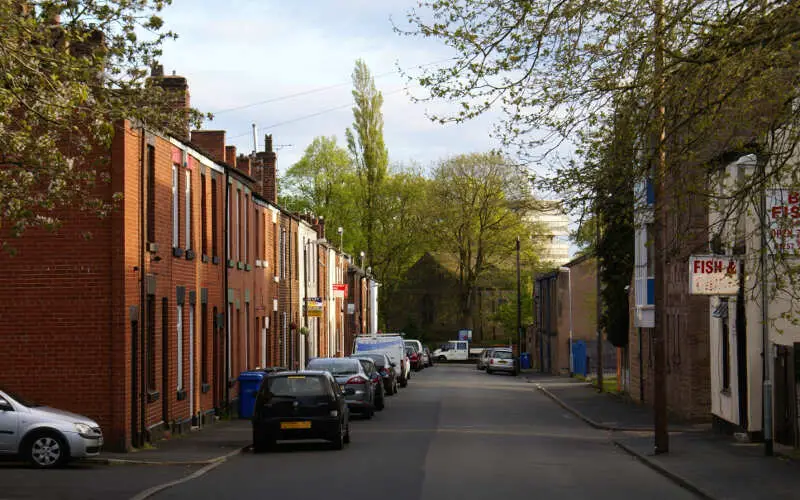
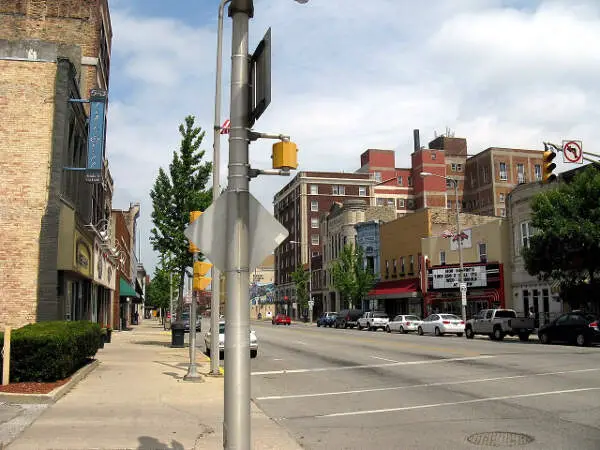
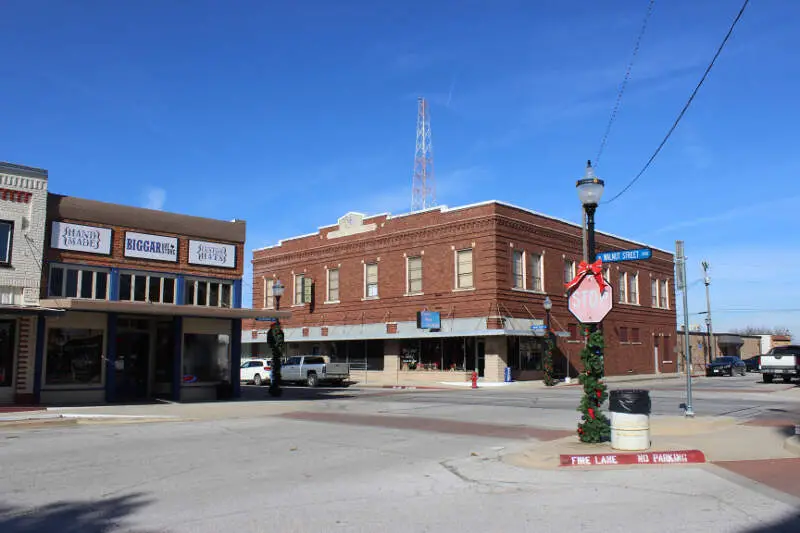
Cleveland vs. Dallas in photos
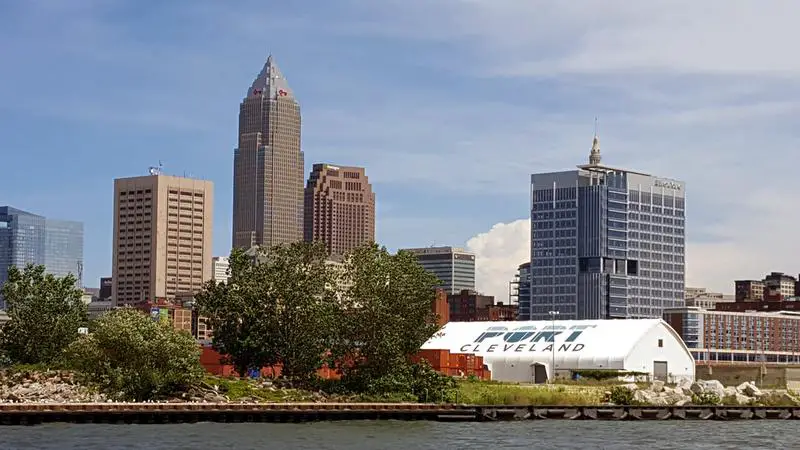
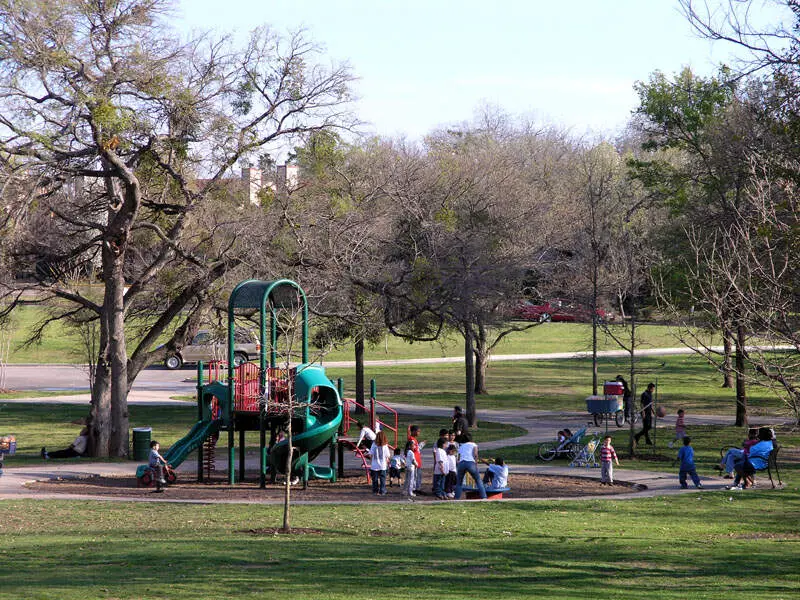
A side-by-side look at each city.




Cost of living
Cleveland is the cheaper city overall — 25% higher in Dallas than its rival. Index baseline: 100 = national average.
| Living expense | Cleveland | Dallas | US average |
|---|---|---|---|
| Overall | 80 | 106 | 100 |
| Services | 96 | 102 | 100 |
| Groceries | 91 | 103 | 100 |
| Health | 48 | 115 | 100 |
| Housing | 91 | 106 | 100 |
| Transportation | 98 | 108 | 100 |
| Utilities | 97 | 104 | 100 |
Lower index = cheaper. 100 = U.S. national average. Bar inside each cell scales relative to the highest value in the table.
Sources: HomeSnacks Cost of Living indices, normalized so 100 = U.S. national average. Drill in: Cleveland cost of living, Dallas cost of living, or the cheapest cities in America.
Housing breakdown
Home prices are higher in Dallas. Compare absolute price and price-to-income — a $500k home in a $100k-income city is very different from one in a $50k-income city.
| Metric | Cleveland | Dallas | United States |
|---|---|---|---|
| Median Home Value | $115,536 | $309,420 | $332,700 |
| Median Rent | $945 | $1,472 | $1,413 |
| Median Income | $40,801 | $70,518 | $80,734 |
| Home Value To Income | 2.8x | 4.4x | 4.1x |
| Rent To Monthly Income | 0.28x | 0.25x | 0.21x |
Source: U.S. Census Bureau ACS 2020-2024. See also states with the highest rent in America.
Crime
Dallas is the safer city — total crime rate of 4,010 per 100k people vs 5,987 for Cleveland. US average: 2,119.
| Crime (per 100k) | Cleveland | Dallas | US average |
|---|---|---|---|
| Total crime | 5,987 | 4,010 | 2,119 |
| Murder | 30 | 14 | 5 |
| Robbery | 389 | 169 | 61 |
| Aggravated Assault | 1,001 | 440 | 256 |
| Violent Crime | 1,561 | 658 | 359 |
| Burglary | 860 | 464 | 229 |
| Larceny | 2,419 | 1,787 | 1,272 |
| Car Theft | 1,146 | 1,100 | 259 |
| Property Crime | 4,426 | 3,352 | 1,760 |
Lower = safer. Bar inside each cell scales relative to the highest crime rate in the table.
Source: FBI Uniform Crime Reporting (2024). All rates are per 100,000 people. City pages: Cleveland crime, Dallas crime. See also: safest cities in America.
Diversity
Dallas is more racially diverse — lower HHI (closer to 0) means a more even mix across groups.
| Group | Cleveland | Dallas | United States |
|---|---|---|---|
| White | 33.7% | 27.6% | 57.4% |
| African American | 45.1% | 22.9% | 11.9% |
| American Indian | 0.1% | 0.2% | 0.5% |
| Asian | 2.6% | 3.8% | 5.9% |
| Hawaiian | 0.0% | 0.1% | 0.2% |
| Other | 0.6% | 0.3% | 0.6% |
| Two Or More | 4.6% | 2.6% | 4.3% |
| Hispanic | 13.2% | 42.6% | 19.3% |
Source: U.S. Census ACS 2020-2024. Lower HHI = more even racial mix. See also: most diverse cities in America.
SnackAbility — overall quality of life
Dallas scores higher overall — 5/10 vs 3/10. SnackAbility is our 1–10 quality-of-life score; the median U.S. city scores a 7.
Scores are 0–10; both bars share the same scale.
SnackAbility is a HomeSnacks proprietary 1–10 score blending jobs, housing, education, commute, amenities, affordability, crime, and diversity. Median U.S. city ≈ 7. Data: Census, BLS, FBI. See also: best places to live in America.
Getting around: Cleveland vs. Dallas
How each city handles commuting, transit, walkability, and car culture — the day-to-day reality that shapes where you'd actually want to live.
Cleveland's Greater Cleveland Regional Transit Authority (RTA) runs light rail on the Red, Blue, and Green lines. The Red Line is the most practical for daily use, connecting the eastern suburbs through downtown to Hopkins Airport. Bus routes fill the gaps, but most Clevelanders still drive; surface lots are cheap and parking rarely feels like a problem.
Dallas is even more car-dependent, and the scale of the metro makes that feel more consequential. DART's light rail network is one of the largest in the country, connecting key corridors like Uptown, Deep Ellum, and the Medical District, but frequency and coverage still lag behind what most transit riders want. The highways (I-635, I-30, I-35E) can turn a ten-mile commute into 45 minutes at rush hour.
If you work in a suburban office park, budget time accordingly. DFW and Love Field both serve the region well for air travel.
Jobs and careers in Cleveland vs. Dallas
The local job market, dominant industries, and which city to choose based on your career.
Cleveland's economy centers on healthcare and education: the Cleveland Clinic and University Hospitals are among the largest employers in the state, and Case Western Reserve anchors a meaningful research ecosystem. KeyBank and Progressive Insurance, both headquartered here, add depth in financial services. The median household income of $40,801 reflects a job market that rewards specialized skills but has fewer high-paying opportunities than many comparably sized metros.
Dallas operates at a different scale. With a median household income of $70,518, the metro draws a broad mix of corporate headquarters (AT&T, Toyota North America, Southwest Airlines, and Texas Instruments all have major presences), along with a growing tech sector, energy jobs, and one of the strongest commercial real estate markets in the country. If you're in finance, tech, logistics, or healthcare administration, the Metroplex generates opportunities at a faster clip than Cleveland.
The trade-off is a cost of living index of 106 versus Cleveland's unusually low 80.
Weather and climate
What to expect day-to-day — sun, fog, heat, rain, and the seasonal extremes that shape the lifestyle.
Cleveland sits on the southern shore of Lake Erie, and that geography shapes its climate. Winters are cold and persistently gray: lake-effect snow can pile up fast, and overcast days stretch from November well into March. Summers are genuinely pleasant, with temperatures in the 70s and low 80s, and if you can handle a dark winter, the other three seasons are easy to love.
Dallas flips that equation. Summers are long and punishing: triple-digit heat from June through September is normal, and humidity makes it worse. Winters are mild by most standards, though the region isn't well-equipped for ice storms, as the 2021 freeze made catastrophically clear.
Spring brings severe thunderstorms and a real tornado threat across North Texas. If year-round sunshine and warmth is a priority, Dallas delivers more of it; if you wilt in heat, Cleveland's summers will feel like relief.
Culture, nightlife, and entertainment
Food, music, neighborhoods, and the city vibe that gives each place its personality.
Cleveland punches above its weight culturally. The Rock & Roll Hall of Fame is the obvious anchor, and Playhouse Square (the second-largest theater district in the country) hosts Broadway touring shows and the Cleveland Orchestra, considered one of the finest in the world. Ohio City, Tremont, and Gordon Square have developed into walkable pockets of restaurants, bars, and galleries, with the West Side Market (open since 1912) still a genuine community institution rather than a tourist trap.
Dallas has the advantage of scale: the Arts District downtown includes the AT&T Performing Arts Center, the Nasher Sculpture Center, and the Dallas Museum of Art all within a few blocks. Deep Ellum is the longstanding live-music hub, with dive bars and venues ranging from small clubs to mid-size rooms. Uptown draws a younger professional crowd, and the Bishop Arts District in Oak Cliff has become one of the more interesting independent restaurant and bar neighborhoods in Texas.
Both cities have real cultural depth. Cleveland's is more concentrated and easier to access on foot.
Outdoor activities and day trips
Parks, beaches, hikes, and the weekend escapes that define life outside the city limits.
Cuyahoga Valley National Park, about 20 minutes south of downtown, is Cleveland's best outdoor draw: 33,000 acres with the Ohio & Erie Canal Towpath Trail and the Brandywine Falls area. The Cleveland Metroparks ring the city with 18 reservations and over 300 miles of trails, and Lake Erie adds Edgewater Park for summer swimming and the lakefront bikeway. It's not a mountain town, but for flat-to-rolling Midwest terrain, the access is excellent and almost entirely free.
Dallas works with flatter, drier terrain. White Rock Lake is a 9-mile loop popular with cyclists and runners year-round, and the Trinity Forest Trail system has expanded substantially in recent years. Arbor Hills Nature Preserve in Plano offers a genuine woodland trail experience close to the northern suburbs.
Palo Duro Canyon ("the Grand Canyon of Texas") is about five hours west and worth the drive; Dinosaur Valley State Park near Glen Rose is a half-day trip. If you need mountains or dense forests, you'll fly to them from either city; Dallas just has more sun for outdoor activity most of the year.
Bottom line: which city is right for you?
Based on the head-to-head data above, here's the short version — pick the city that lines up with what you actually care about.
Choose Cleveland if you prioritize…
- a lower cost of living (cheaper groceries, services, and day-to-day expenses).
Choose Dallas if you prioritize…
- lower crime — a safer place to live, work, and raise a family.
- more affordable housing relative to Cleveland.
- a more racially diverse community (lower HHI on Census data).
- a higher overall SnackAbility quality-of-life score.
Methodology: winners are picked from public data — U.S. Census Bureau ACS (income, home value, rent, race/HHI), FBI Uniform Crime Reporting (crime rates per 100k), and HomeSnacks' proprietary SnackAbility quality-of-life score, which blends Bureau of Labor Statistics data with the above.
Other comparisons
Still weighing your options? See how these two cities stack up against other places we've compared head-to-head.